Play Mat Texture Mapping: Building Infant Neural Pathways
7th Mar•10 min read
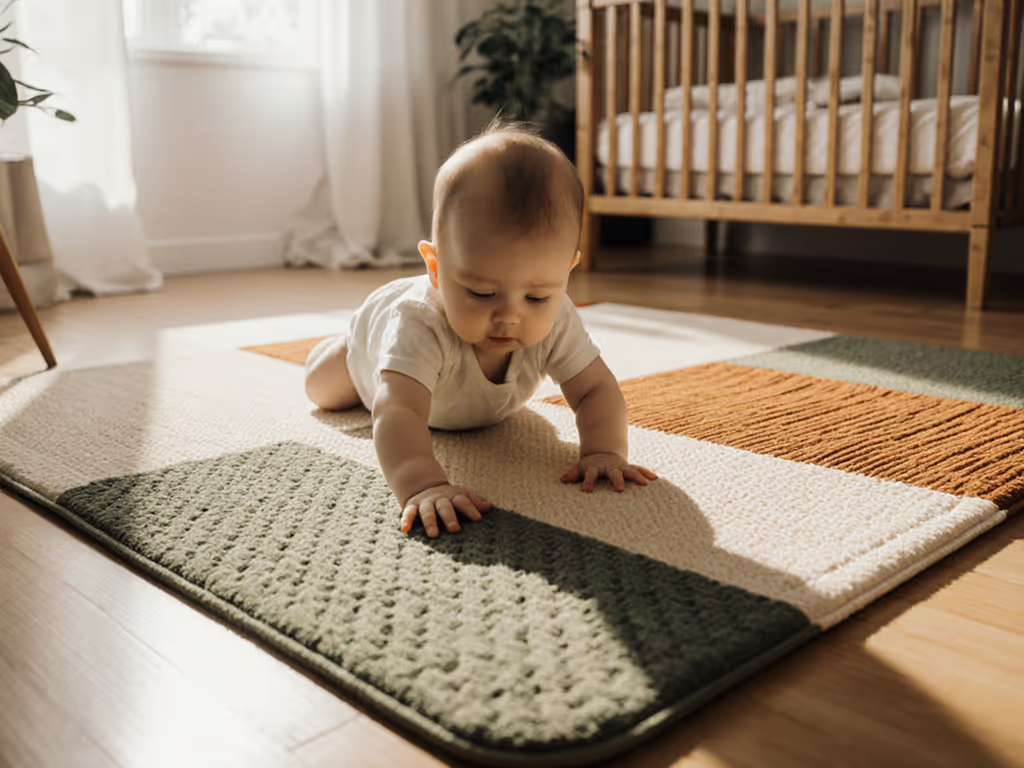
When you place an infant on a neural pathway play mat, you're not just creating a safe zone (you're setting up a sophisticated sensory laboratory). The infant brain development that happens in the first 24 months depends heavily on what surfaces babies touch, how varied those tactile inputs are, and whether the environment encourages movement or passivity. Texture complexity isn't decoration; it's infrastructure for cognitive wiring. For a deeper dive into how texture inputs shape infant brain circuits, see our texture neuroscience guide.
But here's the constraint that urban parents face: how do you balance the sensory richness a developing brain needs with the space reality of a 450-square-foot apartment? That's where precision matters. Square inches are a budget: make the mat earn them.
The infant brain operates on a simple rule: repeated sensory experiences physically reshape neural architecture.[3] Every time a baby's fingers brush a different texture, electrical impulses travel along neural pathways, strengthening connections or forging new ones. This process (called neural plasticity) is most rapid during the first 12 months, when the brain is establishing foundational sensory processing systems.
Neuroscience research confirms that "neurons that fire together, wire together."[2] When infants interact with varied, rich sensory materials, they develop more robust neural networks than babies exposed to uniform surfaces. A flat, featureless mat trains the brain for flatness. A textured mat trains it for complexity: the capacity to distinguish, categorize, and respond to environmental nuance.
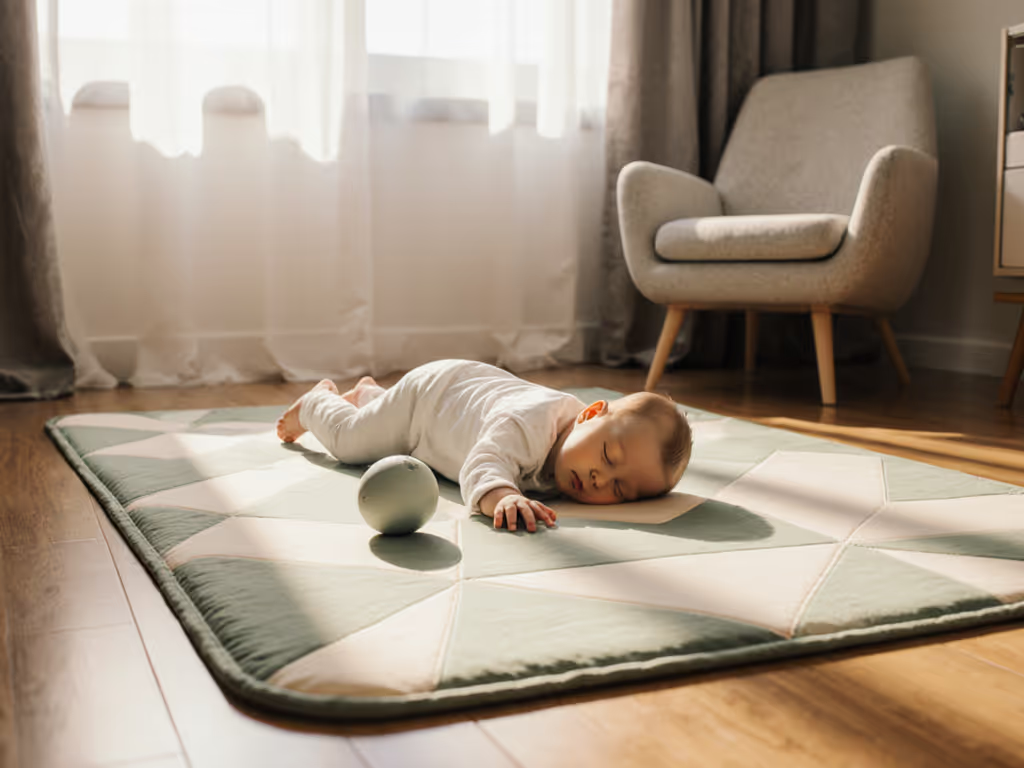
The mechanism is tactile neural development in action. During tummy time, as babies press their palms and forearms against different textures, their sensory cortex maps these inputs. The brain learns: This is soft. This is bumpy. This yields. This holds firm. That differentiation builds the foundation for motor planning, spatial reasoning, and later problem-solving.
Not all texture is equally valuable. The quality, variety, and progression of tactile input determine neural impact.
Passive vs. Active Texture
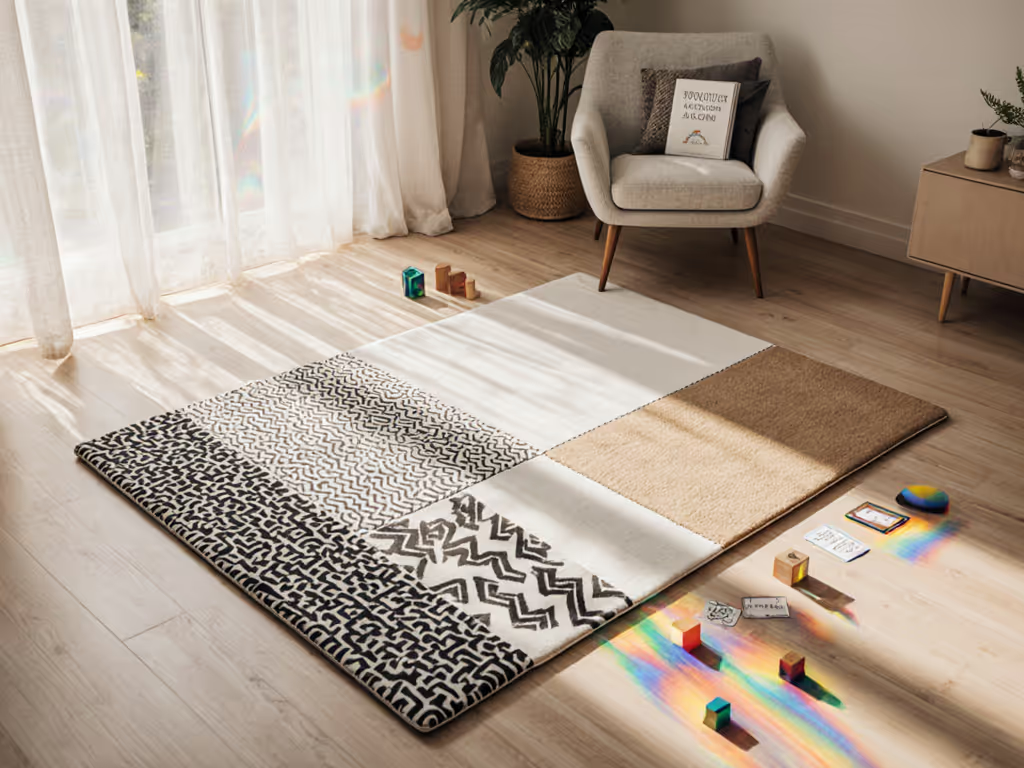
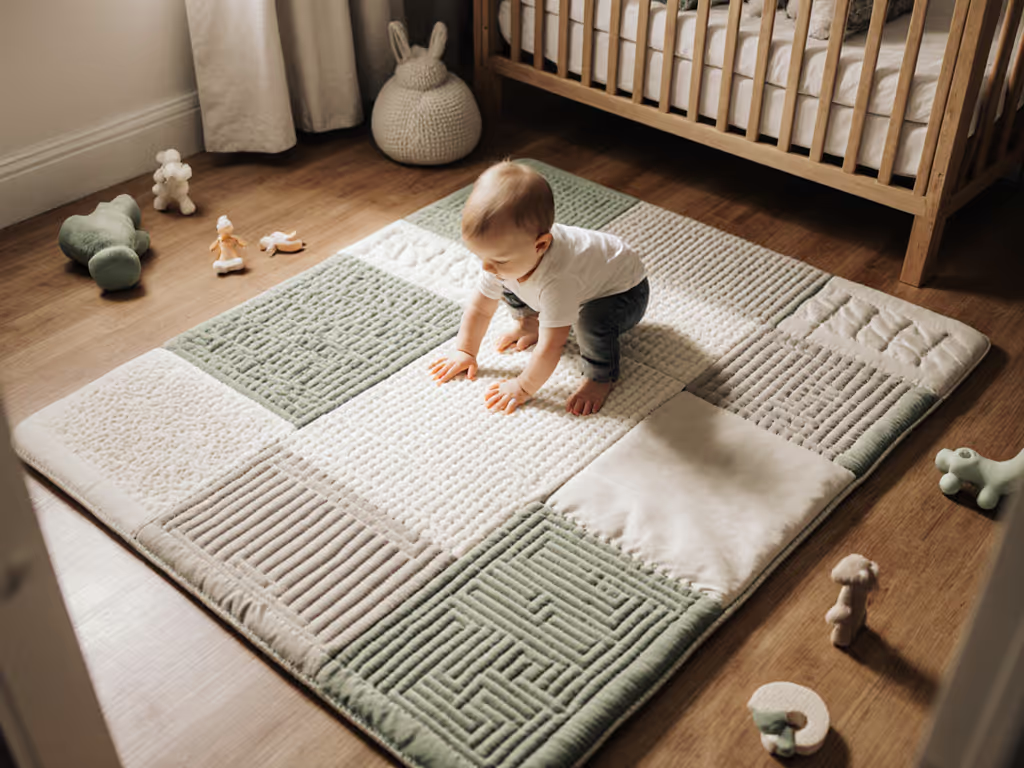
A simple quilted surface provides gentle tactile input but limited stimulus variation. By contrast, a mat featuring multiple distinct textures (fleece panels, crinkly sections, raised geometric elements, smooth silicone patches) creates what researchers call sensory texture mapping: the brain simultaneously processes touch, sound, and proprioceptive feedback (body awareness).[3] Learn evidence-based positioning techniques in our proprioception mat guide. This cross-modal integration accelerates neural wiring in ways a monotonous surface cannot.
Research from developmental psychology shows that tummy time on a plush, textured surface encourages babies to push up, pivot, and roll more confidently than on thin mats, because the varied tactile feedback reduces overstimulation while maintaining engagement.[1] The brain doesn't shut down; it calibrates.
Texture Progression Across Developmental Windows
The optimal texture strategy shifts with age:
0-6 months: Gentle, varied textures (satin, fleece, soft crinkle) introduce sensory awareness without overwhelming emerging neural systems. The goal is consistent, predictable novelty, texture repetition with subtle variation.[3]
6-12 months: As babies begin to grasp, sit, and crawl, textures should offer resistance: materials that push back slightly, prompting the brain to calibrate grip strength and pressure. Raised bumps, dimpled zones, and semi-firm panels build infant cognitive texture response as babies learn cause-and-effect (pressing hard = different sensation).[3]
12-24 months: Toddlers benefit from textural contrast: soft zones for regulation, firmer areas for balance and motor challenge. A mat that separates into zones (a quiet textured corner, an active climbing zone) mirrors how skilled developmental design supports both play and reset.
The case for texture-rich mats is neurologically sound, but real-world constraints demand honest comparison.
| Factor | High Texture Complexity | Minimal/Neutral Texture |
|---|---|---|
| Neural Stimulus | Multiple pathways fired simultaneously; faster wiring density | Single-channel input; slower but stable pathway formation |
| Overstimulation Risk | Higher for sensitive or sensory-seeking babies | Lower; better for irritable or overwhelmed infants |
| Cleanliness & Maintenance | Crevices trap food, drool, pet hair; spot-cleaning required | Wipeable smooth surfaces; easier mopping |
| Storage Footprint | Texture often adds bulk; chunkier fold or roll | Thinner materials compress efficiently under furniture |
| Visual Calm | Patterned/varied colors; may dominate a room's aesthetic | Neutral tones; blends into adult spaces |
| Cost | Higher (multi-layer construction, varied materials) | Lower; simpler manufacturing |
| Durability | Textured surfaces may pill, catch, or separate over time | Smooth finishes resist wear and compression |
Real-World Lesson from Small Spaces
When our son arrived in our 480-square-foot walk-up, I wanted maximum sensory input for development, so I tested a heavily textured, modular tile system. Two weeks of tracking traffic, nap patterns, and furniture placement revealed the trade-off: the mat's rich texture surfaces became crumb magnets, tile edges curled at the seams, and storing six disconnected pieces under the sofa required reorganizing half the bedroom every evening. The mat that actually stayed in rotation was thinner, smooth-topped, and folded under the sofa in six seconds. It returned daily without scraping our hardwood floors. The neural benefit wasn't forfeit: varied tactile activities (different fabrics to touch, textured toys) provided stimulus without demanding architectural complexity from the mat itself.
The insight: texture complexity doesn't require visual or structural complexity.
Strategic Texture Zoning
A mat with a simple silhouette but localized texture variation (a smooth center for rolling and tummy time, a textured border for tactile exploration) delivers neural richness without sacrificing storage or aesthetics. 120 cm × 180 cm (47" × 71") is often the practical floor footprint for urban nurseries; within that, dedicating 20-30% to interactive textures maximizes stimulus while keeping the dominant surface wipeable and visually restful. If space is tight, our play mat size guide for small rooms can help you pick the right footprint.
Material-Level Texture
Smooth surfaces can still offer tactile neural development if the base material itself has inherent texture: natural rubber's slight grain, high-quality foam's subtle density variations, or organic cotton's weave pattern. These micro-textures stimulate the sensory cortex without requiring raised bumps or appliqué.
Layered Sensory Without Visual Clutter
A neutral-tone play mat can anchor other texture sources: fabric books placed on the mat, wooden toys of varying smoothness, crinkle toys introduced during tummy time. This modular approach gives the brain texture variety while keeping the base mat (the permanent architectural element) calm and functional.
High texture complexity is neurologically valid but demands maintenance discipline and storage space most urban families don't have surplus of. The most effective neural pathway play mat for real homes isn't the textually loudest; it's the one you'll actually use daily without resentment.
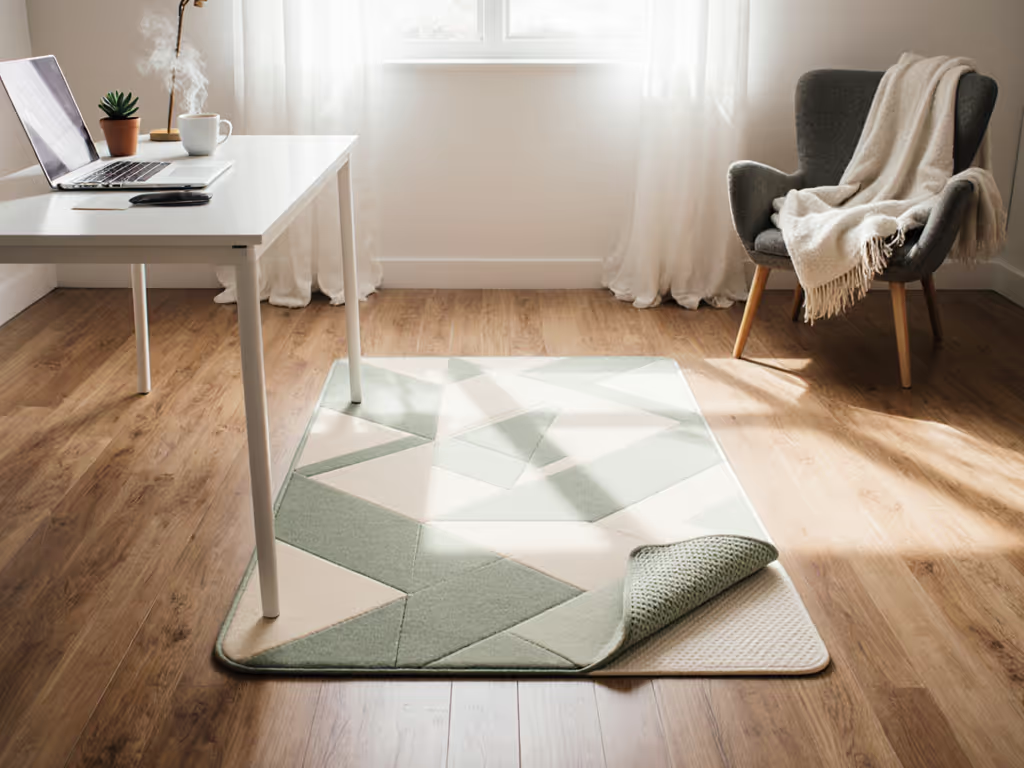
Optimal strategy: Choose a mat with moderate, localized texture, enough variety to stimulate neural development, but not so much that cleaning becomes a barrier to use. Prioritize smooth surfaces that survive hardwood floors, pet claws, and quick mopping. For material-by-material care steps, see our play mat cleaning guide. Pair it with rotating tactile toys and varied fabrics off the mat itself. Ensure it folds compactly (under 4 inches when folded) so you can store it during guest visits without displacing your entire living room.
The best mat is the one your home can live with daily. Buy once, use longer (through tummy time, crawling, and into toddler play). That consistency, across months of repeated sensory engagement, builds more robust neural pathways than any single-use, texture-maximalist design ever could.
Measure your floor. Choose a mat that fits your life, not one that demands your life fit it. Then let the everyday texture (the toys you rotate, the surfaces you introduce) do the neurological work. Your infant's brain will wire itself beautifully within realistic constraints.