Colic-Soothing Play Mat Design For Calm, Stable Comfort
21st May•11 min read
Neural pathway play mats and infant brain development are terms that appear together in product marketing so often that it's worth asking: What does the science actually say, and what's still conjecture? As a parent who started reading material safety sheets out of necessity (and found that my nursery's persistent 'new' smell correlated with headaches until I switched to a mat with published test reports), I've learned that transparency is a feature, not a vibe. This FAQ deep dive separates evidence from claims.
Yes, but with important nuance. Tactile input (including texture complexity) does activate distinct sensory cortex regions in developing brains. Infants have functional somatosensory cortex from birth, and repeated tactile stimulation strengthens synaptic connections in areas that map sensations to motor responses. Research on animal models and neuroimaging suggests that varied tactile input (smooth, bumpy, ridged surfaces) engages more neural territory than uniform surfaces. For a deeper dive into the neuroscience of texture processing, see our texture neuroscience guide.
However, this does not mean a textured mat directly "builds" intelligence or accelerates development on any measurable timeline. Texture is one of many sensory inputs infants receive naturally: caregivers' hands, clothing, toys, grass, food. A mat alone is not a brain-training tool. The stimulus has to be available and the infant developmentally ready to notice and respond to it. A newborn sleeping on a smooth mat gets the same safety benefit as one with embossed patterns.
Sensory texture mapping refers to how the brain's somatosensory cortex (the strip behind the motor cortex) creates a topographic representation of the body's surface and the stimuli it contacts. Rough textures activate different mechanoreceptors (touch-sensitive nerve endings) than smooth ones. Varied textures activate a broader range of receptors and cortical columns.
Infant studies using fMRI show that texture variety increases cortical activation compared to uniform surfaces. What's unclear: whether this heightened activation translates to functional benefits like faster rolling, crawling, or cognitive milestones. Activation is not advancement. Infants crawl and develop on linoleum floors, too.
The honest answer is: the research gap is real. Well-controlled trials comparing textured mats to flat ones on motor milestones (rolling, crawling, standing) are rare. Most developmental psychology research on motor milestones focuses on opportunity, practice, and spatial freedom, not surface texture specifically.
One small observation study found that toddlers spent slightly more time in active play (reaching, grasping, rolling) on varied-texture surfaces than on uniform ones, suggesting texture complexity may encourage exploration. But this isn't proof of accelerated development or neural benefit.
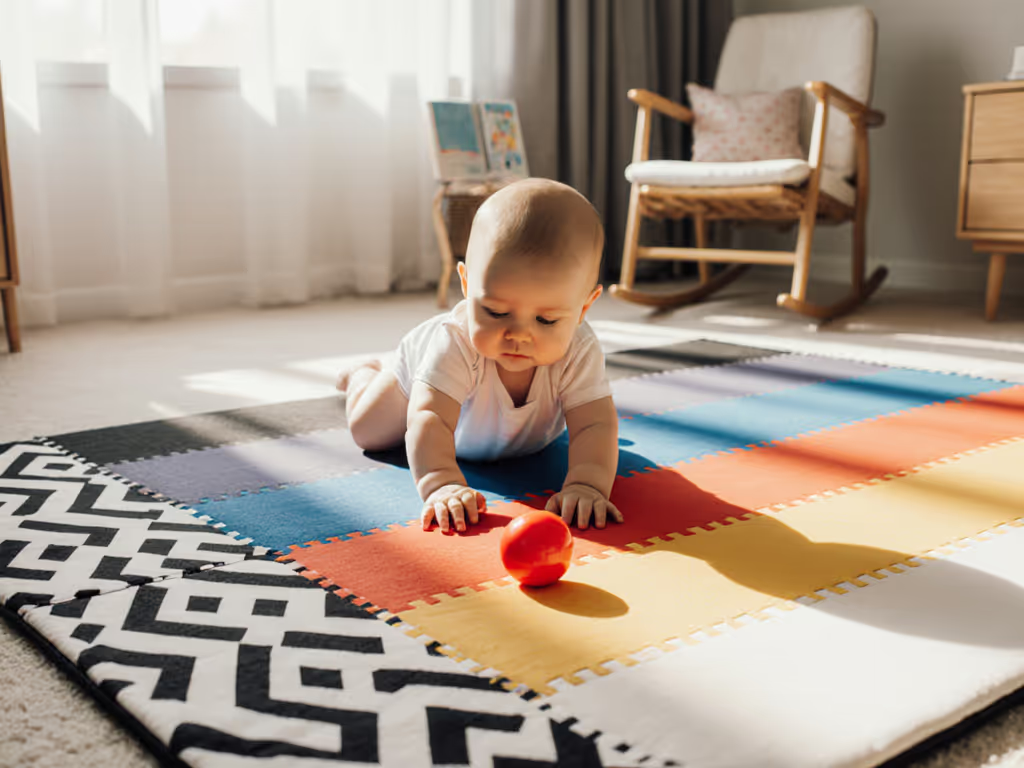
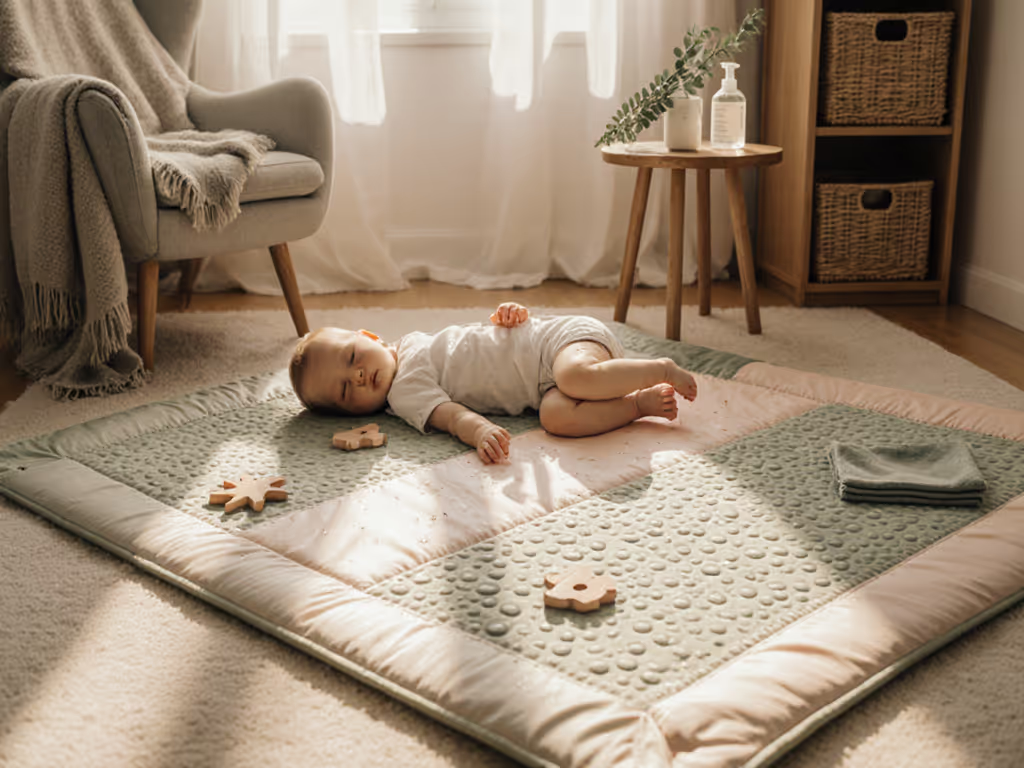
What is clear: infants need floor time, movement opportunity, and varied sensory input (of which texture is one piece). A textured mat supports this. A flat mat does too. The mat's real job is safety (cushioning falls, providing clean space, reducing slipping), not neural acceleration.
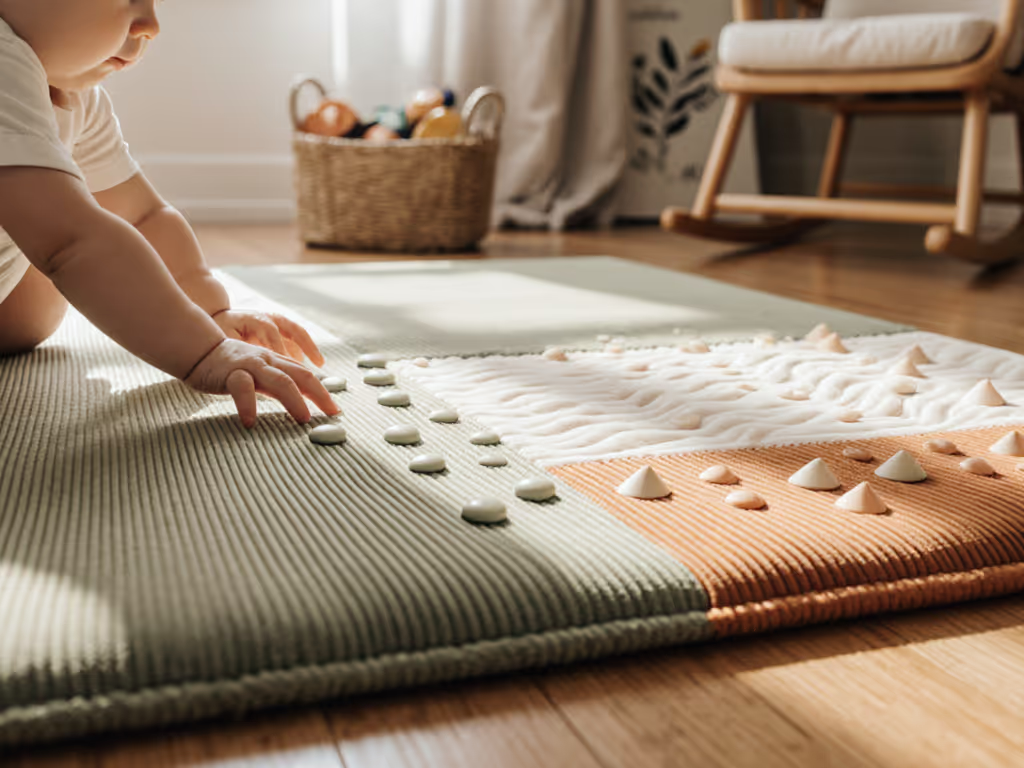
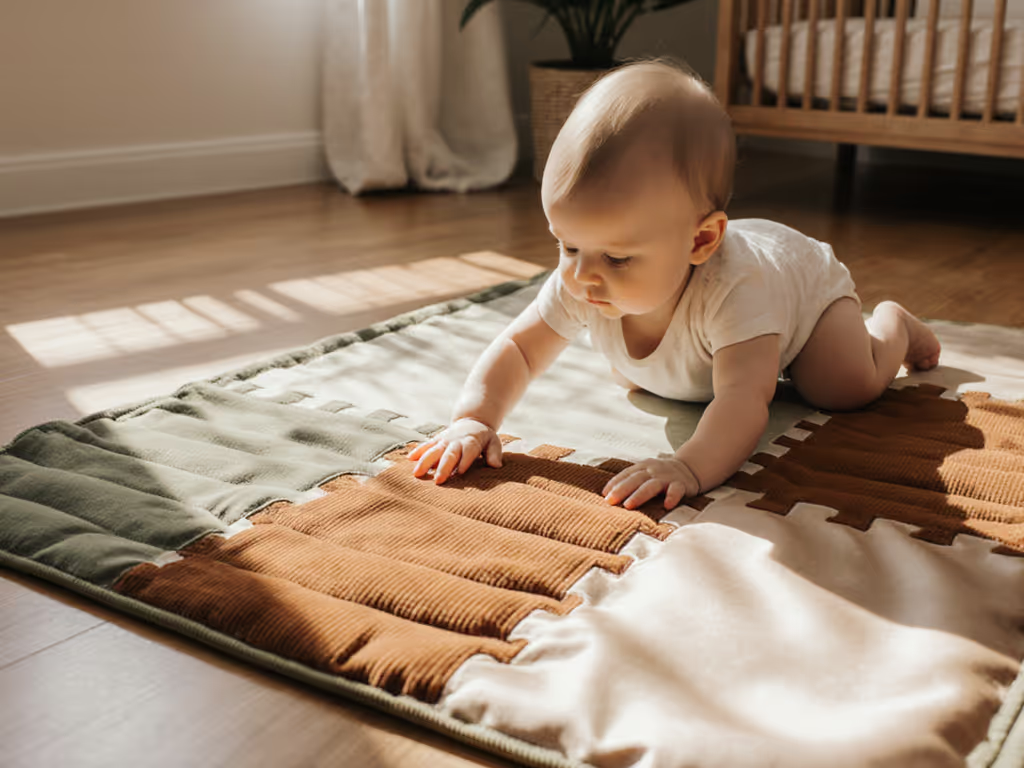
Texture complexity refers to the density and variety of surface features. A smooth mat has low complexity. A mat with multiple bump heights, ridges, and grooves has high complexity. A mat with three distinct zones (smooth, bumpy, ribbed) has even higher variation.
The assumption in marketing is that high complexity = more neural stimulation = better. Research suggests complexity does engage more sensory receptors and cortical area. But infant readiness matters: a newborn's sensory thresholds are different from a 6-month-old's. Too aggressive texture may overstimulate or go unnoticed. Babies are also at risk of fixating on a single surface feature and missing others.
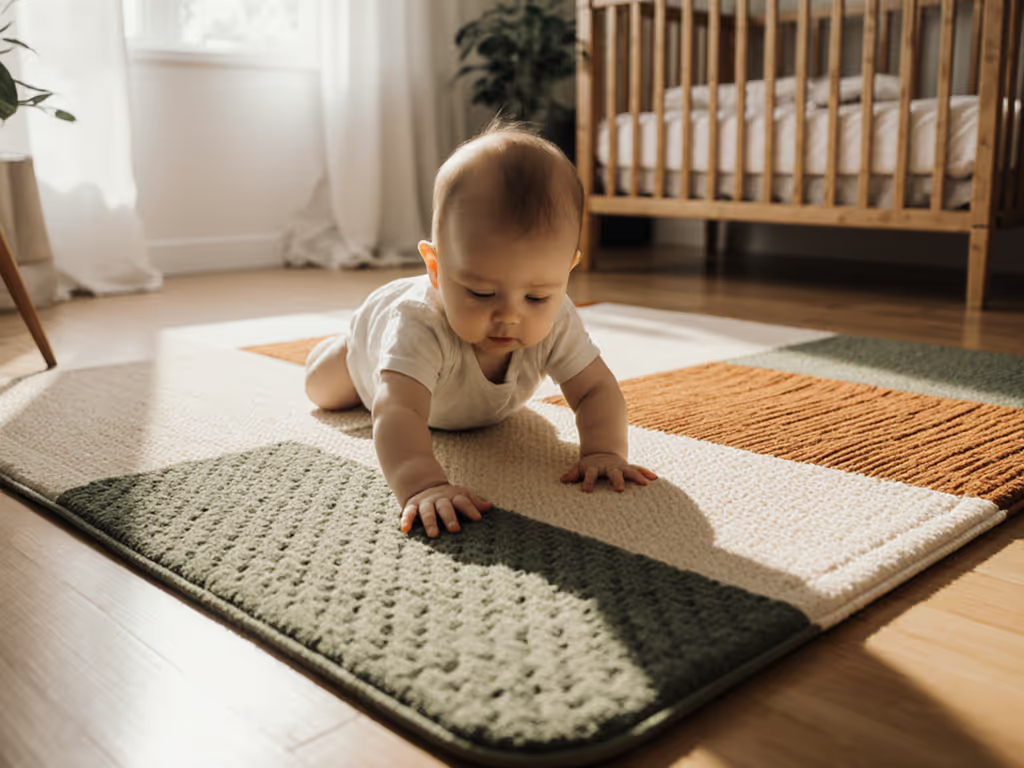
Moderate complexity (2-3 distinct textures in zones, not a chaotic patchwork) appears to balance novelty with cognitive load.
This is where things get speculative. The hypothesis is: varied tactile feedback helps infants build more refined motor maps. If a baby's foot senses different textures during crawling, the brain might calibrate balance and weight distribution more precisely.
Animal studies support this. Rats raised on textured substrates show slight advantages in motor coordination tests compared to those on uniform surfaces. Human studies haven't replicated this clearly. One reason: infants encounter hundreds of textures naturally (clothing, parents' skin, toys, furniture, grass). A single mat is a drop in the sensory ocean.
The practical takeaway: a textured mat doesn't hurt and may offer mild exploratory novelty. It's not a motor-development shortcut. For sensory-motor positioning ideas, explore our proprioception mat guide.
Now, here's where I pivot from texture to something I care more about, and that your pediatrician should too.
Play mat material choice matters far more for infant safety than texture complexity does. For objective pros, cons, and safety profiles by material, see our materials guide. A soft, off-gassing EVA foam mat with embossed patterns is riskier than a flat, low-VOC natural rubber mat. Yet marketing often emphasizes the neurological story ("textured for development!") and obscures the material one ("foam" without disclosing chemical additives).
At minimum:
Mats with this information transparent are less common than mats with flashy texture claims. That gap is exactly where skepticism helps.
It shouldn't, but it often does. Manufacturers may add aggressive bumps to lower-quality foam to create texture novelty ("wow, looks advanced") while cutting corners on material safety. A TPU mat with moderate texture and full chemical disclosure is better for your infant's developing nervous system than an EVA mat with fancy quilting and unknown additives.
Material transparency trumps texture design. Here's your checklist:
The mat's real job is to provide a safe, clean, cushioned space for play. Texture is a secondary design feature, not a primary developmental tool.
If you want to dig deeper, consider:
Texture matters, but material transparency matters more. Choose accordingly.