Colic-Soothing Play Mat Design For Calm, Stable Comfort
21st May•11 min read
Infant visual development play mat choices do more than fill a corner of your nursery, they shape how your baby's brain processes the world during its most critical growth window. But here's what marketing rarely mentions: the wrong color palette can fragment your baby's attention while a thoughtfully matched mat builds visual competence stage by stage.
The science is specific and measurable. What you place under your infant isn't decoration; it's a developmental tool. And like any tool, it works best when sized and tuned to the job at hand.
Your newborn enters the world with color blindness. Infants begin life seeing only high-contrast patterns (black, white, and yellow)[1]. By 2-3 months, they distinguish reds and blues, then greens by 4-5 months[1]. This isn't a marketing hook; it's hard neurology. For a deeper dive into the color science behind baby play mats, explore wavelength, contrast, and pattern complexity by age.
The reason: their visual cortex is still assembling. High-contrast visuals act like scaffolding for that construction. A 2016 study in Infant Behavior & Development confirmed infants fixate 40% longer on high-contrast visuals versus muted tones during early visual development stages[1]. But here's the trade-off marketing skips: excessive color complexity too early can overwhelm still-developing visual systems[1].
Color influences more than visual tracking. Research confirms that different hues trigger measurable physiological responses (shifts in blood pressure, brain activity, and stress hormone levels)[4]. Cool tones like soft blues and greens may lower cortisol in some infants during sleep transitions, while warm tones like yellows and oranges increase alertness[1]. Neutrals provide visual rest for overwhelmed babies[1].
But here's the constraint you'll face: one mat must serve many developmental windows. That's where a staged color strategy prevents you from buying three mats.
Your newborn needs monochrome with bold black-and-white contrasts[1]. Avoid pastel or soft tones; they're functionally invisible to your infant at this stage. Geometric patterns (stripes, checks, stark shapes) work harder than amorphous blobs.
Why this matters for small spaces: a clean black-and-white mat reads as modern, not childish. It won't clash with hardwood or neutral furnishings. Dimension-first: aim for 60-90 cm (2-3 feet) in the shorter dimension; your newborn's floor time in these early months occupies minimal square footage. If space is tight, use our play mat size guide to right-size your setup without sacrificing development. You're not filling the room, you're creating a focused landing zone.
Trade-off insight: high contrast may feel stark compared to colorful alternatives you see in marketing imagery. But a 2016 PMC study observed preschoolers made 32% more errors on structured tasks against colorful backgrounds versus neutral surfaces[1]. Your baby's emerging focus can't afford visual noise.
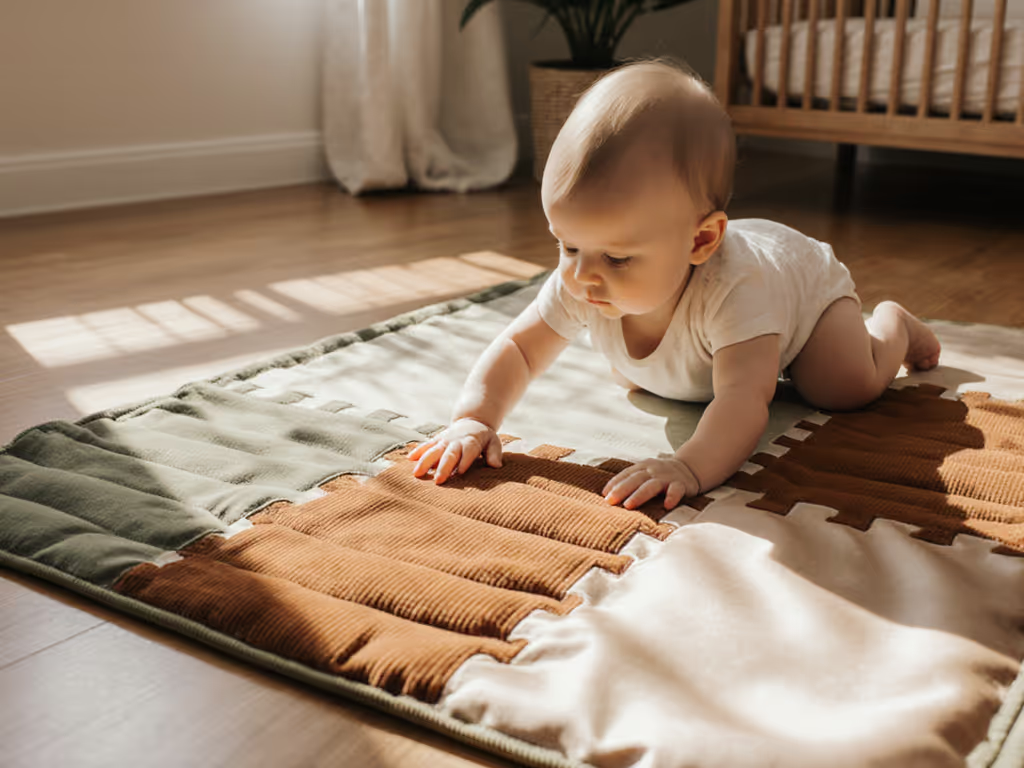
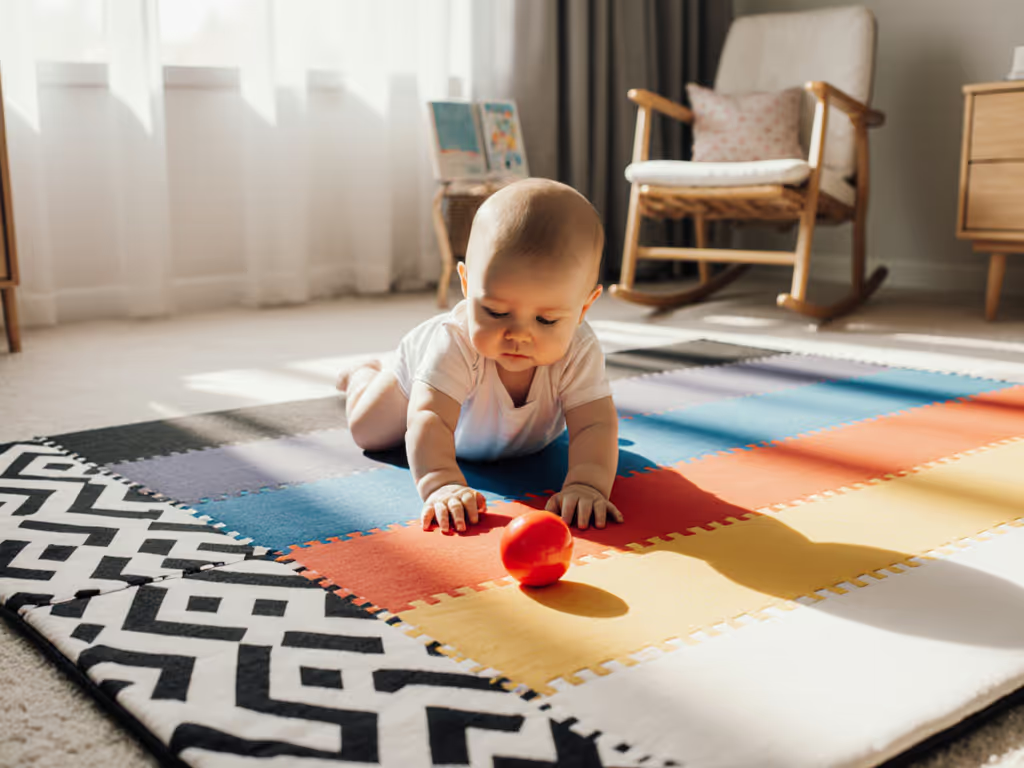
At 3 months, add one bold primary color per visual quadrant: red, blue, or yellow against a neutral base[1]. At this stage, your infant's color recognition is activating; they need clear, separated color zones to build neural pathways. Avoid mixed-pattern busywork.
Layout strategy: if your mat is 120 cm × 120 cm (4 feet square), divide it mentally: red top-left, blue top-right, yellow lower-left, neutral lower-right. This signals color identity without fragmenting attention.
Storage consideration: by 6 months, your baby is likely rolling and reaching beyond the mat's edges. You'll need to accommodate daily movement. If your mat folds or rolls, test the fold-time in your living space. When I tracked tummy-time flow in our walk-up, I taped mat footprints on the floor for a week (traffic patterns, where sunlight hit during nap hours, the angle of the sofa). The winning mat folded under the sofa in six seconds and returned without scraping our old hardwoods. The math was simple: if a mat took 45 seconds to store, it wouldn't be used daily. Storage earns its square inches.
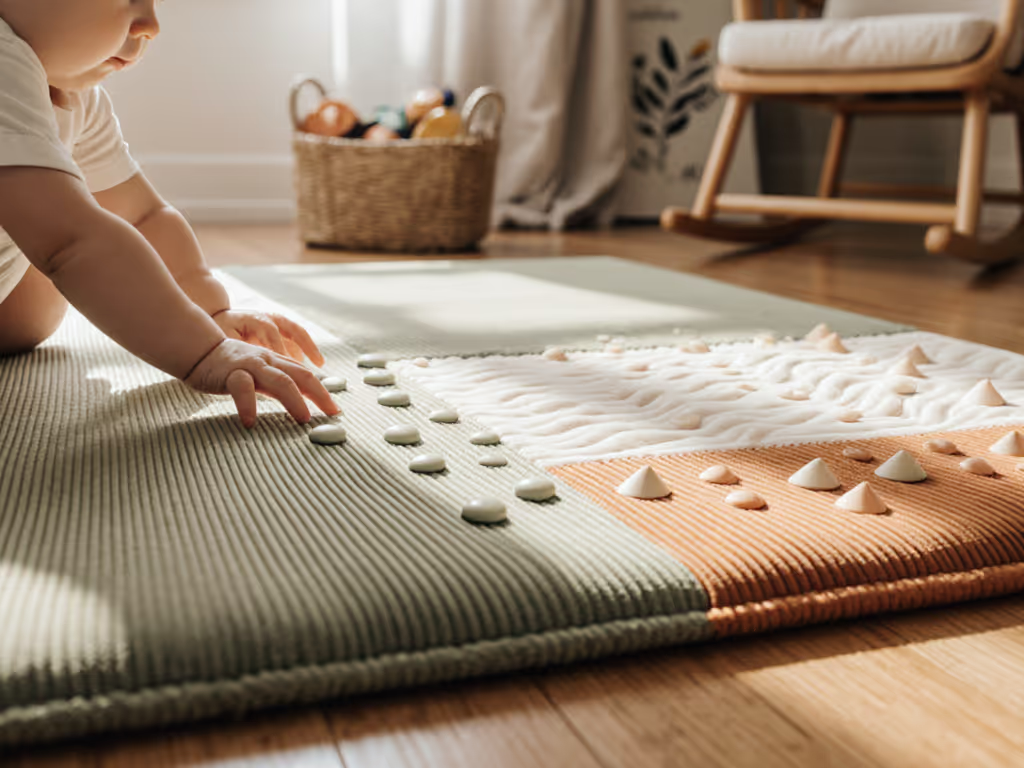
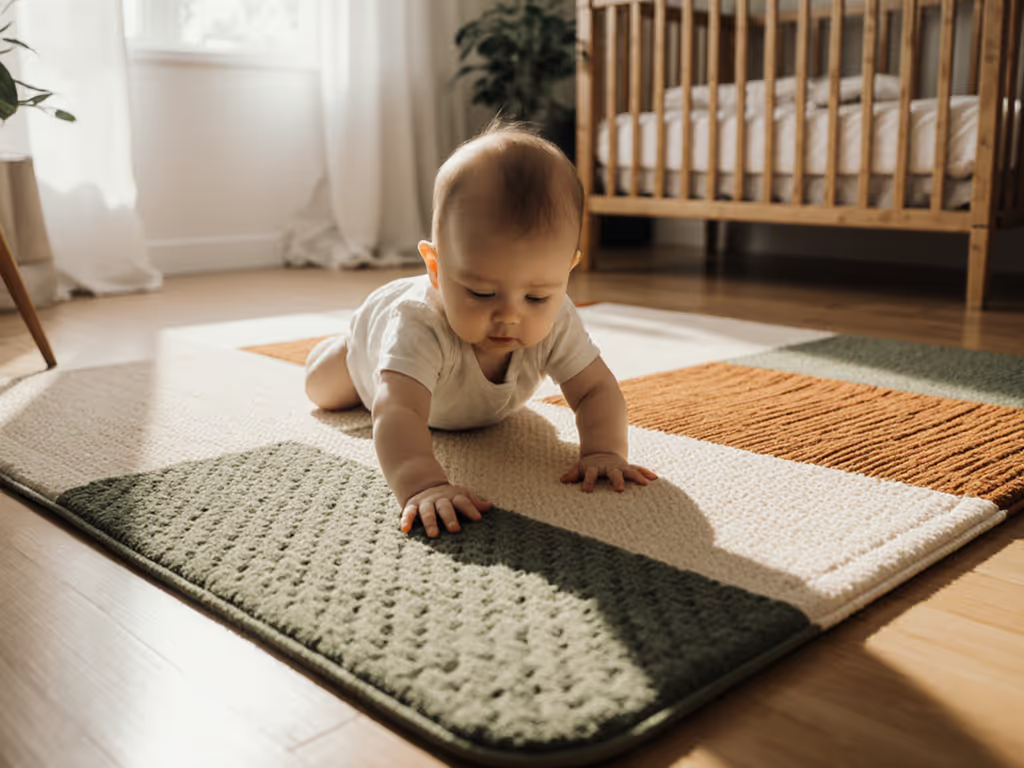
From 6 months forward, grouped color families with clear object separation support depth perception and object permanence[1]. An "ocean" palette of blues and greens (with distinct toys or shapes outlined against the background) works better than an undifferentiated riot of hue.
Consider: too many competing patterns can delay cause-and-effect learning. If your baby can't isolate a toy against background noise, they can't practice "I bat this, it makes a sound." Simplicity drives motor skill.
At this stage, your baby pulls to stand and cruises. Non-slip becomes non-negotiable. If you have hardwood or carpet, see our surface compatibility guide to choose non-slip options that actually stay put. Neutral colors here flatten the aesthetic (no need for bright primary colors to trigger development anymore). Your mat can finally become invisible to adult design sensibilities while remaining developmentally active.
Many parents (I was one) believe "more color equals more development." The data says otherwise. Visual clutter creates three hidden risks:
Attention fragmentation: Infants struggle to focus on toys when background colors compete[1].
Sensory overload: Particularly in neurodivergent babies or those with sensory processing differences[1].
Tracking impairment: Rapid eye movement becomes harder against chaotic patterns, critical for infant visual development[1].
A study on playground design found that pastel shades paired with vibrant accents (not all-vibrant environments) improved children's attention and reduced tension[6]. The principle transfers to mats: reserve saturation for key details, not the entire surface. If your baby shows sensory sensitivities, our SPD play mat guide explains how to dial down visual load without losing engagement.
Here's where square inches become currency. Calculate your available floor space:
If you're in a 480-square-foot home or smaller, oversizing costs you storage and daily usability. Measure twice. A mat that doesn't fold or roll under your sofa won't earn daily use.
What it costs per month matters too. A $300 mat used daily from birth through 18 months = $16.67/month. A $150 mat used for 9 months before you switch = $16.67/month. Same burn rate, different lifecycle. Transparent math reduces purchase anxiety.
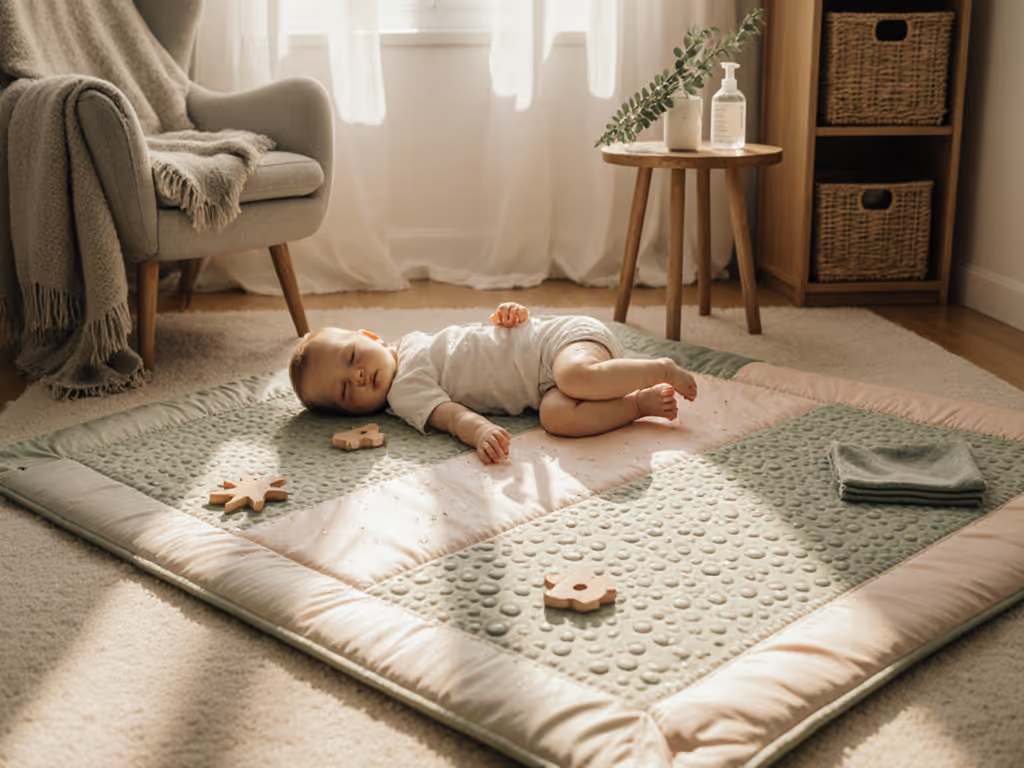
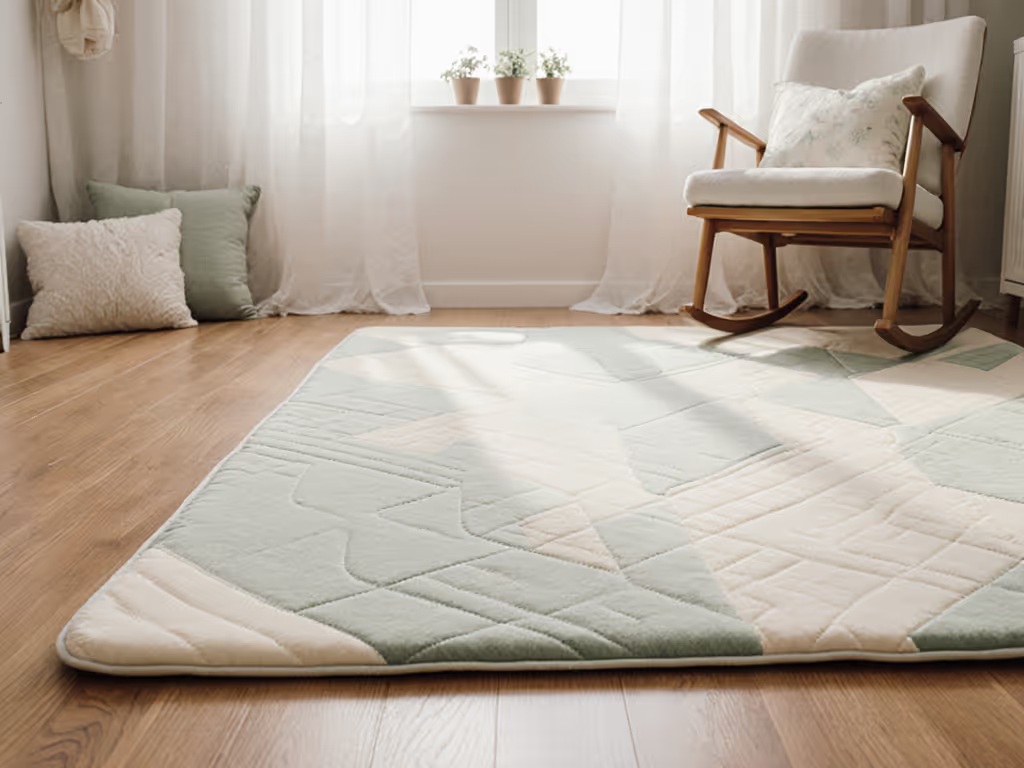
The best mat evolves with your baby. Early stages demand contrast to build visual architecture; later stages demand clarity to support learning. Neutral, modern palettes (soft grays, warm beiges, muted sage) accommodate all three windows while anchoring your living room as adult space.
Trade-off clarity: neutrals are less "stimulating" to an adult eye but more developmentally supportive across 0-24 months. Busy prints date quickly and fragment infant focus. High-contrast black-and-white mats feel minimal and premium while serving real neurology.
Choosing a baby play mat isn't about matching a nursery theme; it's about matching your infant's visual development timeline. Your newborn needs high contrast to build focus. Your 3-month-old needs distinct colors to recognize hue. Your 6-month-old needs patterns separated enough to isolate and learn. One mat should travel all three legs without losing you storage or aesthetic ground.
The best mat is the one your home can live with daily (something that stores neatly, reads modern in your adult space, folds without scraping floors, and evolves from stark contrast to calm complexity as your baby's brain catches up). Measure your footprint, match the color palette to the current developmental stage, and prioritize foldability over visual maximalism. Your infant's visual system will thank you. So will your living room. For age-by-age color and pattern picks, see our visual development play mat guide from newborn to toddler.