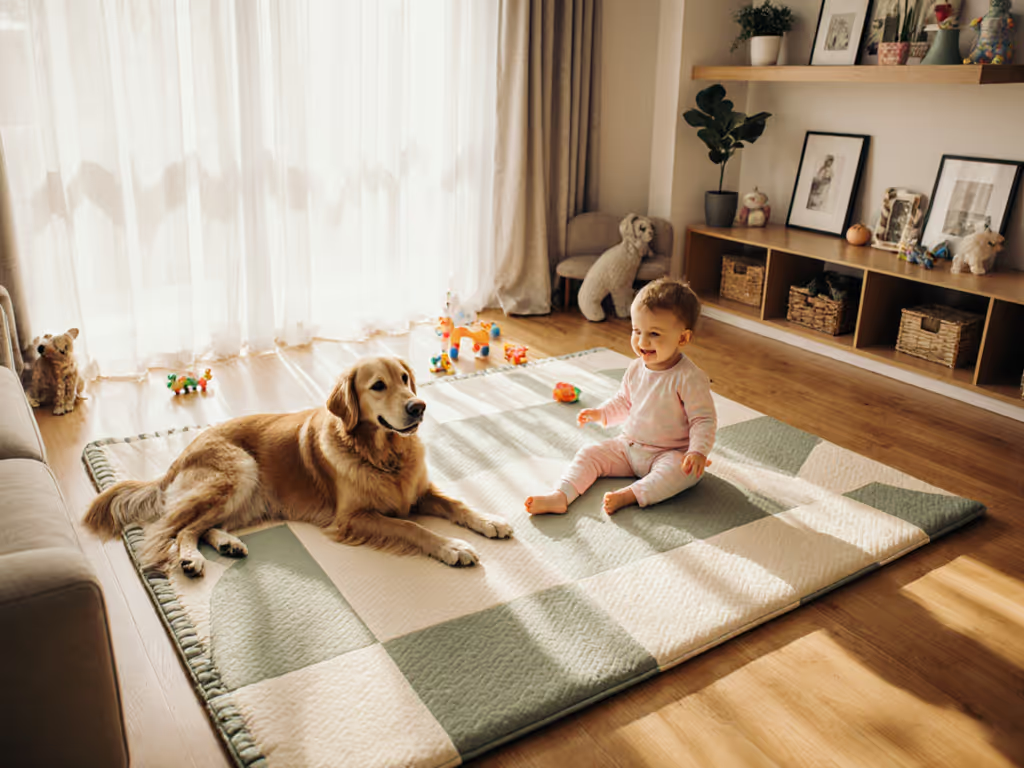
Pet-Friendly Play Mat Comparison: Safest Picks for Pets & Babies
25th May•14 min read
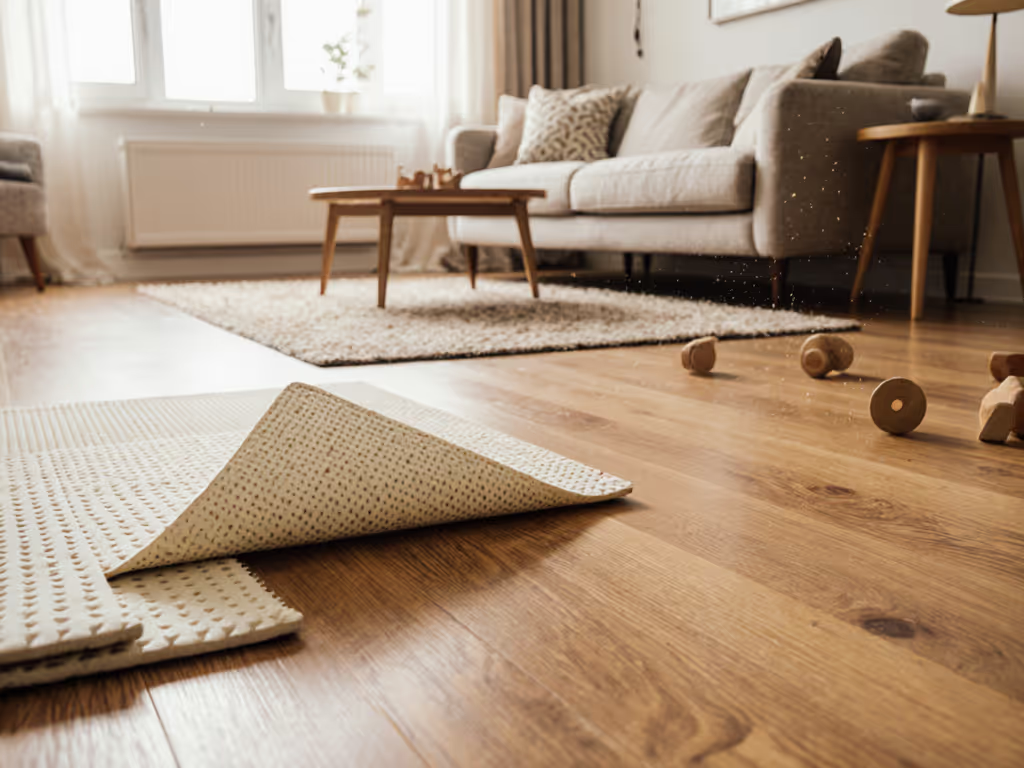
When your son arrived in a 480-square-foot walk-up with original parquet and old radiant heating, a hardwood floor play mat comparison became urgent, and humbling. I spent a week taping mat footprints on the floor, tracking where a stroller sat during nap time, where crawl sessions pooled under the window, and where our dog would pad through. The mat that won wasn't the thickest or softest. It folded flat under the sofa in six seconds, returned to shape without creasing, and never once slipped on the heating pipes below. If storage speed matters in tight spaces, see our foldable vs roll-up play mat comparison.
A play mat for hardwood floors is not a generic decision. Hardwood introduces specific physics: surfaces are slick, mat edges become trip points, and the finish (whether waxed, polyurethane-sealed, or freshly oiled) affects grip. If the floor is over radiant heat, material choices narrow further. Square inches are a budget... make the mat earn them.
This guide walks you through testing and selecting a non-slip hardwood play mat that fits your footprint, respects your floor, and stays functional from newborn through toddler.
Before comparing materials, measure and characterize your playing zone.
Hardwood floors aren't all alike. Waxed hardwood (common in older homes) is slippery; a standard mat can shift under a baby's weight or a toddler's pull-to-stand. Polyurethane-sealed hardwood (most modern homes) offers slightly more grip but still defeats many low-friction mat bases. Oil-finished hardwood is variable; some oils hydrate mats unevenly.
Radiant heat floors add a layer of concern: some mat materials warp, yellow, or off-gas when heated. You need a radiant heat compatible play mat, and not all are. See our radiant-heated floor mats guide for tested temperature limits and material stability.
Don't default to large. Measure your actual usable play zone - the area where baby will roll, crawl, and (later) stand and move. Avoid corners, heating vents, and furniture feet.
A common mistake: buying a 5-ft × 5-ft mat (1.5 m × 1.5 m) for a room where two-thirds is blocked by a sofa. You've wasted floor real estate and storage capacity. For right-sized picks by home footprint, explore our play mat size guide.
Benchmark dimensions:
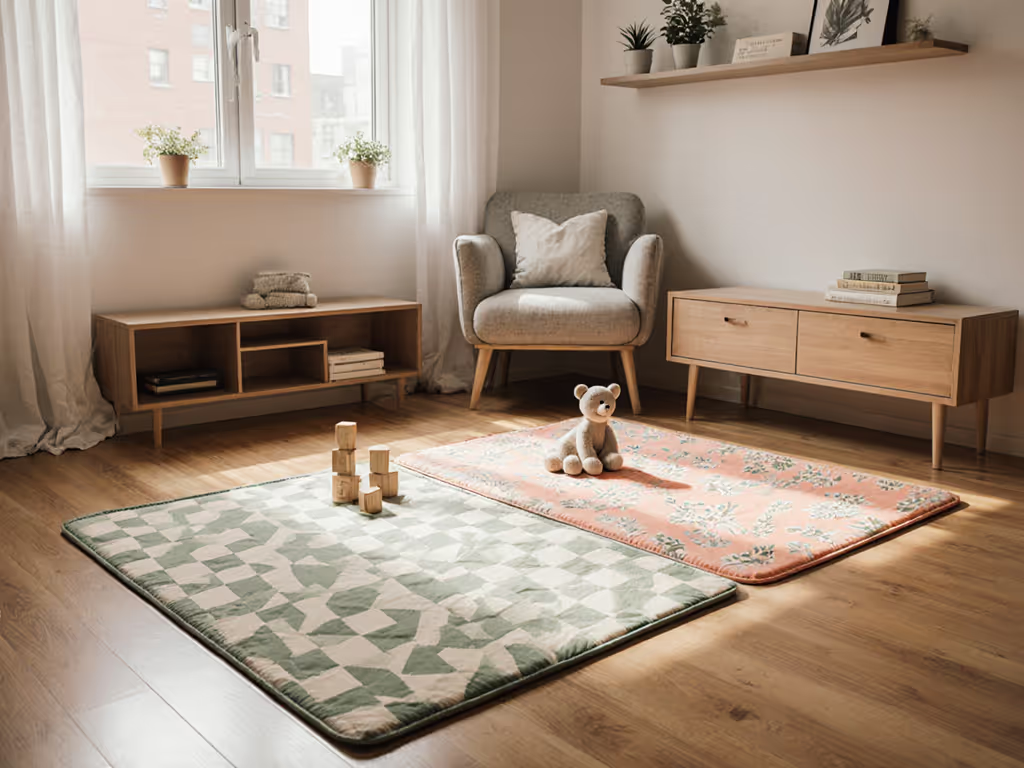
Measure floor footprint, ceiling height, and nearby furniture offset. In a small living room, a 5-ft × 7-ft mat may dominate. Will you roll it under a sofa for guests? Test the roll width. (Rolled, a 5-ft × 7-ft one-piece mat is ~10-12 in. in diameter; it must fit the gap between sofa base and floor.)
Pros:
Cons:
Non-slip hardwood play mat option: Look for EVA with a natural rubber or synthetic rubber backing (at least 2 mm thick). This adds ~15-25% to cost but is essential on hardwood.
Pros:
Cons:
Radiant heat compatibility: Most natural rubber mats are safe on radiant heat up to 27°C (80°F) continuous. Confirm with manufacturer.
Pros:
Cons:
A scratch-resistant play surface and non-slip base are separate requirements.
Textured rubber or TPU backing:
Gripper corner dots or pads:
Double-sided rubber base:
Non-slip doesn't mean non-movable. A mat with strong grip may pinch or crease hardwood if shifted repeatedly in the same direction (common with crawling patterns). Rotate the mat weekly to avoid permanent compression marks.
Test the mat's grip by placing it on your hardwood and pressing down firmly along one edge. Try to slide it with one hand while standing. If it moves easily, the non-slip solution is insufficient for a crawling or cruising baby.
Square inches are a budget (make the mat earn them).
A too-large mat with mediocre non-slip will shift constantly, creating trip hazards and defeating the purpose.
Hardwood parents prioritize cleanability. For step-by-step protocols by material, use our play mat cleaning guide. Diaper blowouts, spit-up, and (if you have pets) urine accidents demand a surface you can sanitize without damaging the underlying hardwood or the mat.
Pros:
Cons:
Pros:
Cons:
Check compatibility with your mat. Most rubber-backed mats are safe with a damp mop (squeeze excess water); steam can degrade glued seams. Avoid bleach or ammonia; these can yellow rubber or degrade TPU.
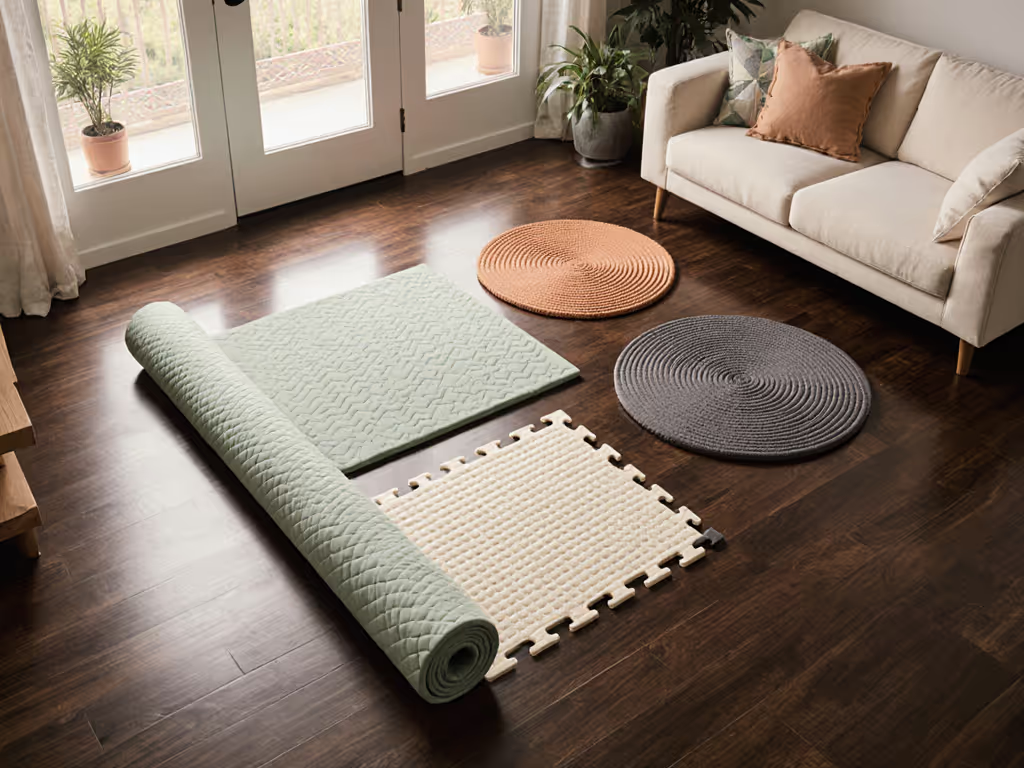
All mats should tolerate standard vacuum. Puzzle-tile drawbacks (pieces separate, edges curl, crevices trap dirt) mean high-maintenance if you choose modular. Flat one-piece mats are easier to vacuum.
If you use a robot vacuum, confirm clearance under your mat. Most require mat edges to lie flat; if your mat's edge curls (common with EVA), the robot will catch and drag the mat or stop.
Premium mats are pricey upfront, but the durability and adaptability can justify cost if amortized across the actual usage window.
Example A: EVA mat with rubber backing
Example B: Natural rubber mat
Example C: TPU/cork premium mat
If you buy a starter set and add tiles:
Trade-off: tiles curl, crevices trap dirt, pieces can go missing.
Natural rubber and TPU/cork mats often resell on secondhand parent sites for 40-60% of retail. Factoring resale into lifecycle value:
Natural rubber mat (original $200, resell $100) over 24 months:
Recommendation: Natural rubber or double-sided rubber-backed mat. Texture and mass grip is non-negotiable.
Why not: Thin EVA mats will drift under crawling pressure, creating a safety hazard.
Recommendation: EVA with rubberized backing (3-4 mm), or hybrid TPU/cork. Grip is adequate if the backing is thick and textured.
Why: Polyurethane offers micro-texture; a quality backing maximizes this. Cost is lower than full natural rubber.
Recommendation: Confirm mat material is rated for continuous temperatures up to 27°C (80°F). Natural rubber and EVA with heat-safe backing are safest. Avoid pure cork (absorbs heat unevenly) or low-grade TPU (can off-gas when heated).
Test protocol: Place mat on floor, run heat to 25°C (77°F) for 4 hours, sniff for odor. If you smell chemical off-gassing, return it.
Recommendation: Flat, non-marking rubber backing. Confirm the mat does NOT leave residue or stains on old hardwood. Test for 48 hours in an inconspicuous spot.
Avoid: Adhesive-backed corner grippers or double-sided tape; these can damage finishes and void your security deposit.
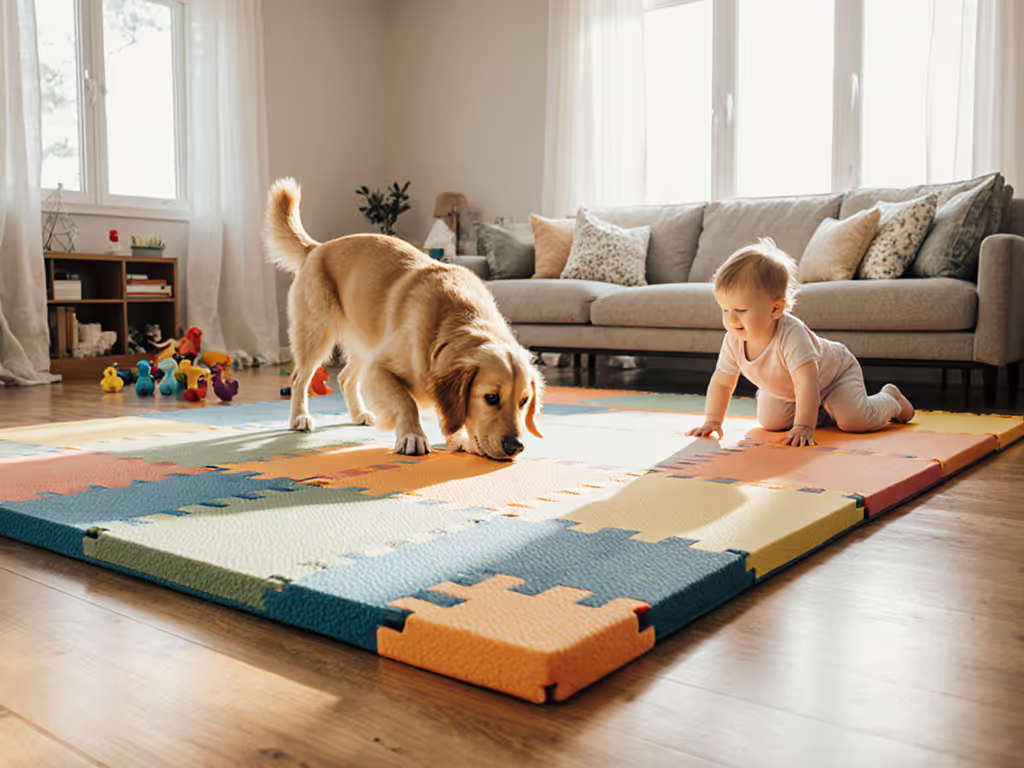
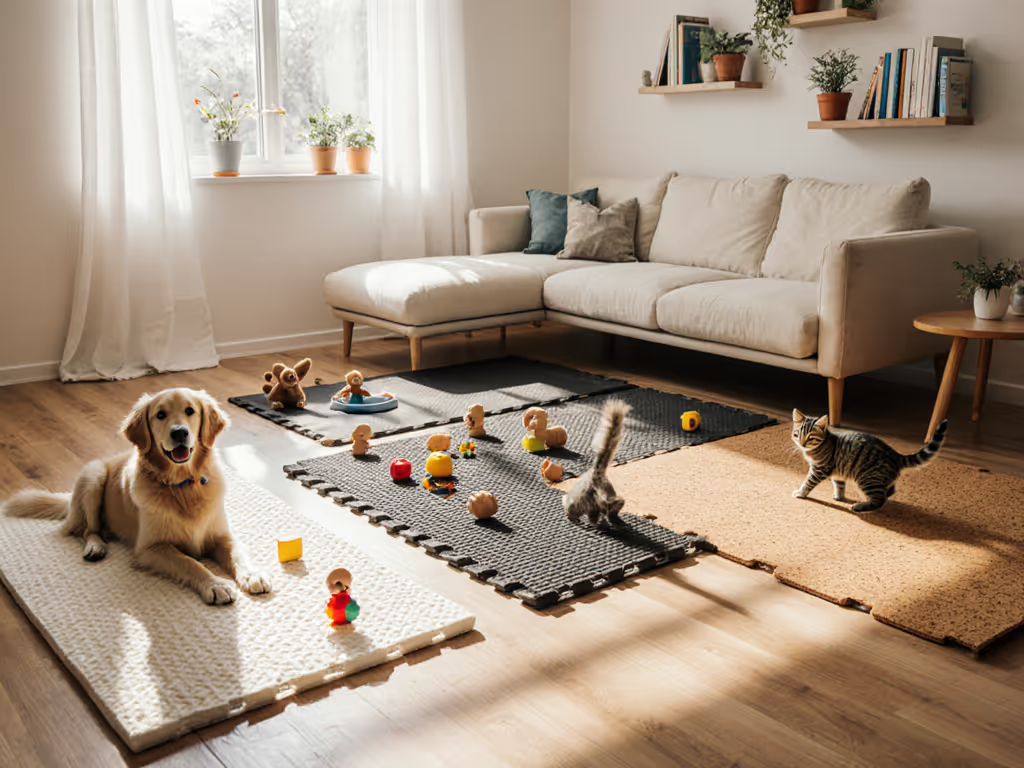
Recommendation: Wipe-clean or machine-washable mat. Natural rubber and sealed EVA resist odor better. Modular tiles are a risk (pets may chew edges or dislodge pieces).
Durability note: Pet claws can scratch EVA and thin rubber surfaces. Look for mats with a 1-1.5 mm protective top layer or test hardness rating (Shore A 50-70 is scratch-resistant).
The best mat is not the softest or biggest. It's the one your home can live with daily, one that doesn't shift underfoot, wipes clean in seconds, folds under the sofa for guests, and earns every inch of your small space from day one through the toddler years.