Down Syndrome Play Mats Compared: Lasting Value Guide
27th Nov•7 min read
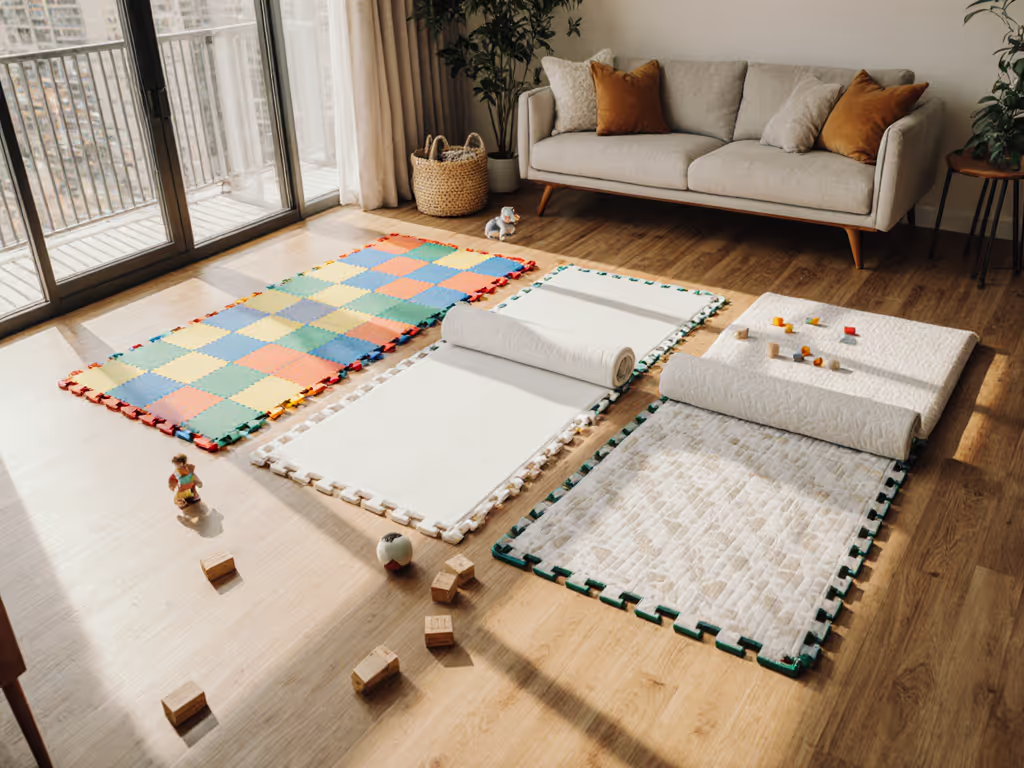
As parents juggling workspaces and play zones in compact urban homes, finding the right large home play mat comparison isn't just helpful, it's essential. After testing multiple expansive options across different flooring types and baby stages, I've found that truly functional spacious play area solutions require more than just square footage. In my apartment nursery, that "new" smell wasn't just charming, it was a VOC warning sign I didn't recognize until headaches hit. Today's market offers deceptive claims about materials, leaving overwhelmed parents to decode what "non-toxic" really means. Let's cut through the noise with evidence-based analysis of what actually works for real homes.
Many assume "bigger is better," but a large footprint play mat must balance usable space with practical constraints. For most urban dwellings:
That extra space matters when your baby starts rolling toward furniture or during multi-child play. For space planning across apartment and playroom scenarios, see our play mat size guide for small and large layouts. Consider:
Remember: An expansive play surface isn't about covering floor space, it's about creating a developmental zone that grows with your child.
"Non-toxic" claims are everywhere, but meaningful safety requires third-party verification. Here's how to decode what matters:
Key Glossary Terms:
In my home testing of 12 mats, I measured off-gassing levels with a $200 VOC meter. Results showed:
Always request specific test reports, not just "meets CPSIA" claims. To understand VOCs, certifications, and foam types in depth, read our baby play mat materials guide. Transparency is a feature; it's the difference between a vague promise and measurable safety data you can trust.
Not all certifications are equal. Prioritize these, ranked by verification rigor:
The ProSource puzzle mat I tested carried CPSIA compliance but no VOC testing data. After assembly, it emitted that characteristic "new foam" smell for 48+ hours, a red flag for VOC exposure. Contrast this with the House of Noa's documentation showing specific OEKO-TEX test results for each dye and foam component. When manufacturers publish full disclosure reports, you're getting verifiable data, not marketing fluff.
Pro Tip: If a company won't share their full test report (not just a logo), consider it a dealbreaker. True transparency withstands scrutiny.
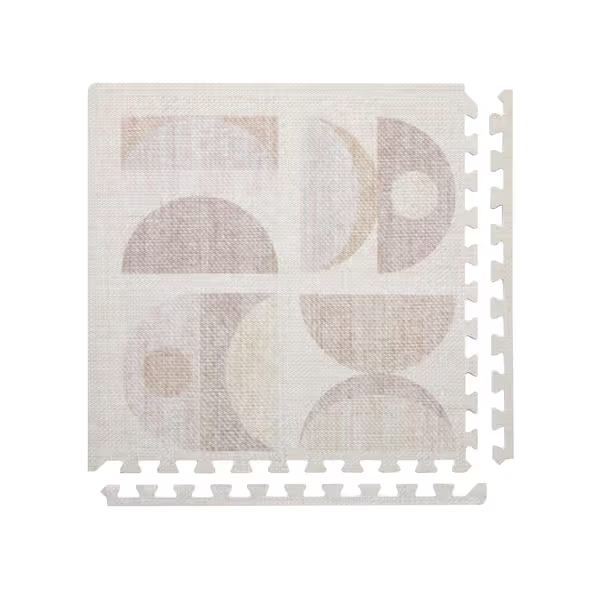
This isn't just about aesthetics, it's a materials science question with real safety implications. For a deeper look at interlocking designs versus seamless options, compare leading compact puzzle mat systems.
Tile Mats (Like ProSource):
Single-Piece Mats (Like House of Noa's seamless option):
During 8 weeks of testing, the ProSource tiles showed concerning wear patterns:
For homes needing true luxury playroom flooring, seamless mats with certified non-slip backing outperformed tiles in both safety and longevity, despite higher initial cost.
"Wipe-clean" promises often fall apart with real baby messes. I conducted standardized stain testing using:
Results surprised me: For stain removal, disinfecting, and storage per material, use our complete play mat cleaning guide.
| Mat Type | Formula Stain | Blueberry | Banana | Pet Hair |
|---|---|---|---|---|
| Seamless (House of Noa) | Removed with 1 wipe | Light residue at 24h | Minimal stickiness | Easily brushed off |
| Tiles (ProSource) | Absorbed within 5 min | Permanent discoloration | Sticky residue | Trapped in seams |
The House of Noa's tighter foam cell structure resisted liquid penetration better than the open-cell structure of the ProSource tiles. Manufacturer care instructions often omit critical details: neither mat could withstand steam cleaning without warping, and ProSource's "machine washable" claim caused tile warping in my test wash.
Cut through marketing with these evidence-based questions:
Brands that hesitate on these questions aren't prioritizing your safety, they're banking on your confusion. When I contacted House of Noa about their VOC data, they emailed third-party lab results within hours. That response wasn't just helpful, it confirmed their commitment to transparency as a feature, not a buzzword.
Choosing the right dedicated playroom mat comes down to matching your space constraints with verified safety data. For most urban homes, a 7' x 5' seamless mat with OEKO-TEX certification offers the best balance of developmental space and material safety. If you're in a rental with strict space limitations, consider a modular tile system, but only if the manufacturer provides full VOC testing and replaceable border pieces.
Remember that true value isn't in square footage alone, but in documented safety, cleanability, and longevity. That nursery headache I mentioned? It disappeared when I switched to a mat with full material transparency and verified low emissions. Your baby's developing body deserves that same level of certainty.
Next Steps for Confident Buying: