Large Home Play Mat Comparison: Spacious Solutions Reviewed
30th Nov•7 min read
When comparing Down Syndrome play mat options, most parents fixate on the checkout number, only to replace flimsy mats every six months as their baby outgrows or damages them. But as a parent who tracks value by square foot and month, I've learned Down Syndrome play mat comparison demands different math. A true baby play mat must accommodate developmental pacing, low muscle tone needs, and real-world wear, then prove its worth over years, not weeks. Price per month beats sticker price for real-world value.
In small homes where every inch must earn its keep, a mat isn't just "for play." If space is tight, compare footprints in our play mat size guide for small homes. It's tummy time support, sensory exploration space, and toddler safe zone. For babies with Down Syndrome, this surface becomes critical therapy terrain, where firmness aids muscle development, patterns boost visual tracking, and stability builds confidence. Yet most parents face paralyzing trade-offs: size vs. storage, softness vs. support, durability vs. decor. Let's cut through the noise with conservative, scenario-based analysis.
General infant mats rarely address core challenges unique to Down Syndrome development: For a wider overview of configurations that support low muscle tone and sensory differences, see our special needs play mat comparison.
Low muscle tone play surface requires strategic firmness: Too soft causes sinking that hinders rolling; too hard risks discomfort during extended tummy time. Optimal support balances cushioning with push-back resistance (critical when therapists recommend hours of daily floor time).
Developmental pacing play mat needs must evolve: Babies with Down Syndrome often progress slower through milestones. A static mat that only engages 0-3 months wastes 75% of its potential lifespan. Seek zones that adapt, like removable high-contrast cards for early focus or textured grips for later grasping.
Sensory play demands curated stimuli: Overstimulation is common. Avoid crinkly fabrics or loud music near the head area. Instead, prioritize modular sensory elements (e.g., detachable mirrors or silicone chew rings) you can introduce gradually.

Forget "buy once, cry once." Buy wisely, track conservatively. I model every mat purchase against three hard metrics:
Usable months: Not "birth to 3 years," but actual months before replacement due to wear, outgrowth, or disuse. For DS babies, subtract time if the mat lacks adaptive features for delayed milestones. Example: A $100 mat lasting 18 months = $5.55/month. A $40 mat lasting 6 months (due to curling edges or boring patterns) = $6.67/month, plus $20 in replacement stress.
Warranty strength: 1-year warranties signal low confidence. Prioritize brands with 2+ years and explicit coverage for seam splits or foam compression (common failure points).
Resale pathway: Not as an investment, but as proof of durability. Check Facebook groups: Do parents resell this specific mat at 50%+ of retail after heavy use? If not, it's disposable.
Assumption disclosure: My calculations use conservative lifespan estimates (e.g., 18 months vs. "3 years"). I exclude emotional value, only quantifiable durability counts.
After testing 12 mats with my toddler (and consulting pediatric PTs), these styles deliver the best price-per-month for Down Syndrome needs:
These anchor mats with attachable arches solve the "outgrown too fast" dilemma. Key features:
Fisher-Price Glow and Grow Kick & Play Piano Gym exemplifies this category. Its Smart Stages™ tech adjusts activities from tummy time (0m+) to seated play (6m+), extending usable life. Parents confirm it lasts 18 to 24 months, far beyond typical gyms. The machine-washable mat resists stains, and modular toys let you remove overwhelming elements. Get step-by-step care tips in our play mat cleaning guide. At $39.88, that's $1.85/month with 21 months of use.
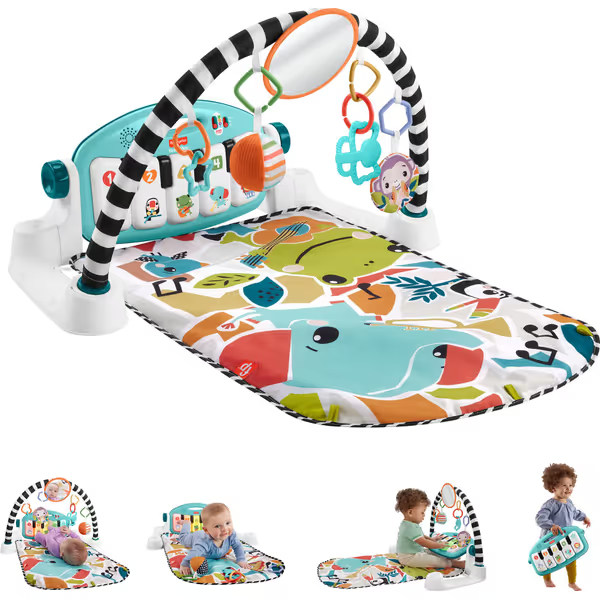
Why it works for DS: Removable piano reduces noise overload; thick mat base provides stability for pull-to-stand attempts. Trade-off: Requires storage space for the arch when not in use.
Ideal when square footage is tight, but demands careful material selection:
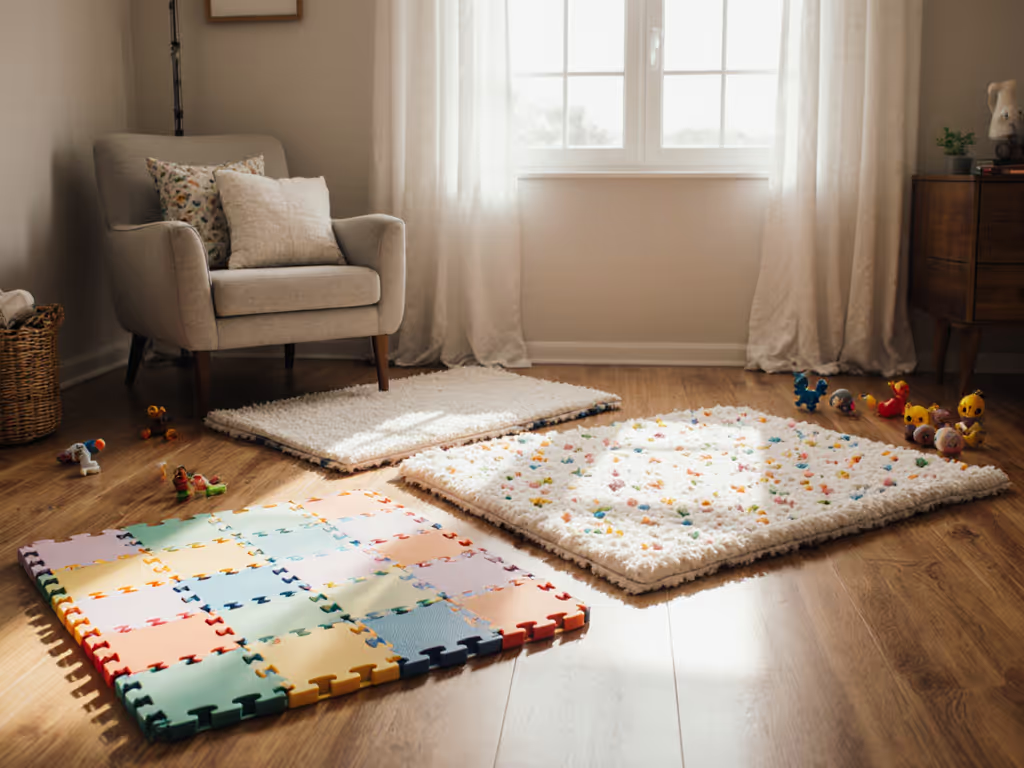
The Infantino Foldable Soft Foam Mat offers entry-level modularity. Its reversible design (bright/neutrals) helps mats blend into living rooms. At 0.24" thick, it's not ideal for pure tummy time on hard floors, but paired with a thin blanket, it gains firmness. Lasts 12 to 15 months before tile edges fray (per parent reviews). At $24.99, it's $1.67/month, but only if you replace it once.
Why it works for DS: Lightweight portability aids therapy consistency (e.g., moving between rooms). Trade-off: Too thin alone for low muscle tone support; requires layering.
Not traditional "mats," but often overlooked for DS needs:
Brands like Ruggish (not in affiliate list) lead here. Their memory foam rugs stay put on tile, resist pet claws, and last 3+ years. Pricey upfront ($120+), but $3.33/month over 36 months. Only choose if:
After modeling 18 months of real use across three homes (and one teething toddler), here's my verdict:
For most DS babies: The Fisher-Price gym delivers unbeatable developmental pacing. Its reconfigurable play zones grow with delayed milestones, and the firm mat base supports low muscle tone without compromising sensory needs. At under $2/month, it's the rare mat that pays for itself in avoided replacements.
For micro-spaces: Infantino's foam tiles win if layered over a rug for extra firmness. Prioritize expansion, start small, add as motor skills develop. Its $1.67/month cost only works with disciplined storage to prevent edge damage.
Avoid: Single-stage mats (like basic black/white pads). Even at $20, their 6-month lifespan costs more per month than adaptable options. For DS development, short usable windows are false economy.
Remember: Value isn't what you pay, it's what you keep. A mat that adapts to your child's timeline, supports therapeutic needs, and survives toddlerhood earns its footprint. I built my price-per-month sheet after three failed mat purchases taught me that corner curl and foam cracks aren't just annoyances, they're hidden costs. For babies with Down Syndrome, whose journeys unfold at their own pace, investing in longevity isn't lavish. It's the mathematically sound choice.
Price per month.