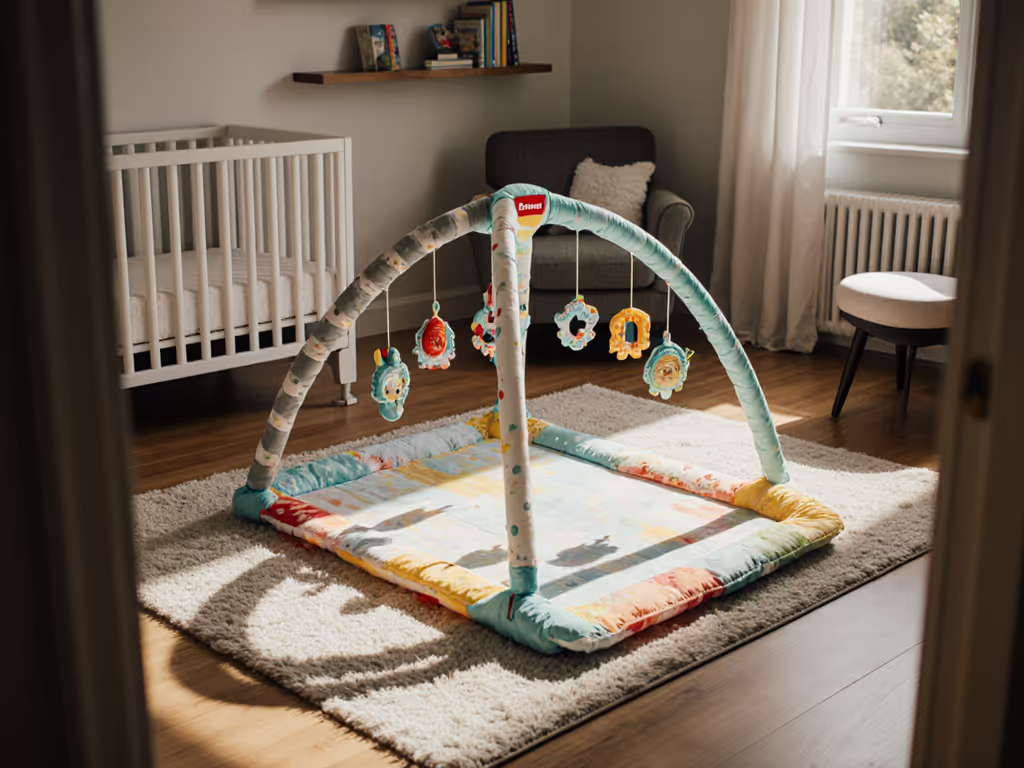
Fisher-Price Glow & Grow Kick and Play Gym Review: 0-24 Months
11th Jan•7 min read
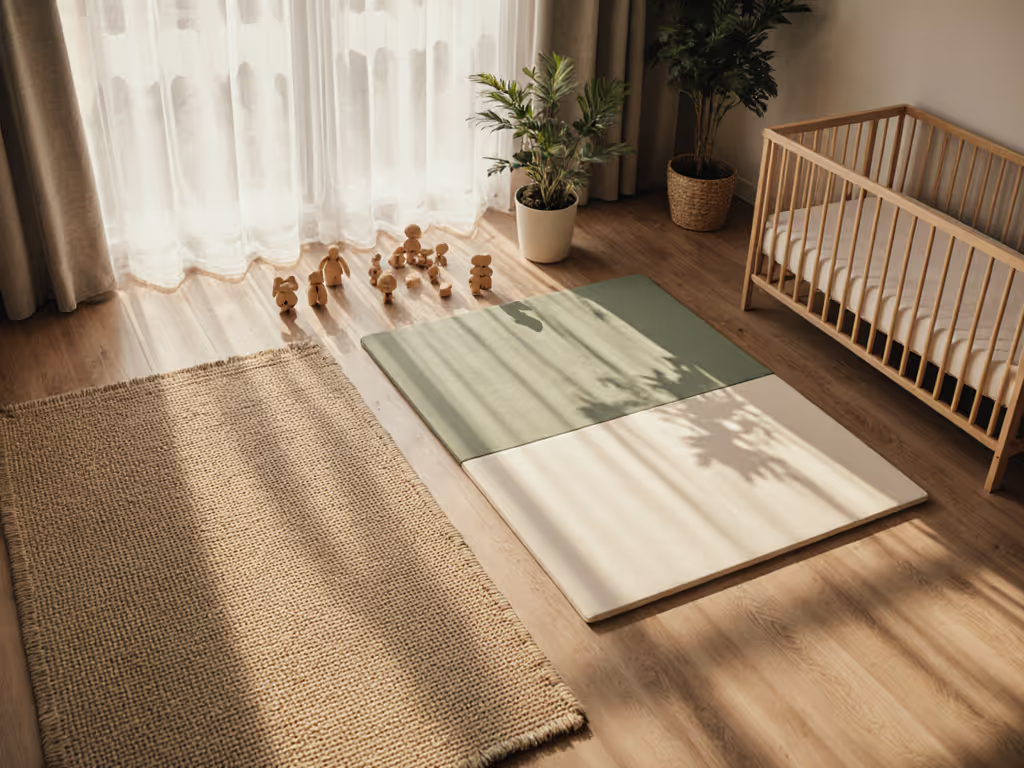
When we unpack the play mat design history, we're tracing humanity's quest to create safe, inviting ground for our youngest explorers. The evolution of play mats isn't just about materials, it's about how we've learned to measure comfort through cultural shifts, floor types, and the physics of tiny knees. What began as woven grass now demands precision: millimeters of cushioning, firmness metrics, and floor compatibility that works with your floor, not against it. Let's walk through this journey stage by stage.
Long before "play mat" was a concept, humans sought refuge from cold, hard earth. Archaeological evidence (and historical infant floor play) reveals our earliest solutions: layered bark, compacted earth, and woven reeds. These weren't designed for play; they were survival tools. In Mesopotamian settlements (6,000 BCE), we see traditional play surfaces emerging: tightly woven grass mats averaging 3 to 5 mm thick. They provided minimal cushioning but critical insulation on stone or packed-dirt floors. Crucially, they were lightweight and portable, a feature modern parents chasing napping toddlers still crave.
Support is distribution; thickness alone is a blunt instrument.
These mats had limits: minimal non-slip properties on smooth surfaces, and organic fibers that degraded quickly. Yet they solved the core problem early caregivers faced: creating a defined, safer zone amid open floor plans. For today's urban parents wrestling with hardwood slippage, this echoes a timeless truth: cultural play mat evolution always starts with context. See our safe play mat surfaces guide for floor-by-floor non-slip advice. A mat that fails on tile (as I learned crawling beside my daughter) isn't "bad," it is mismatched to its environment.
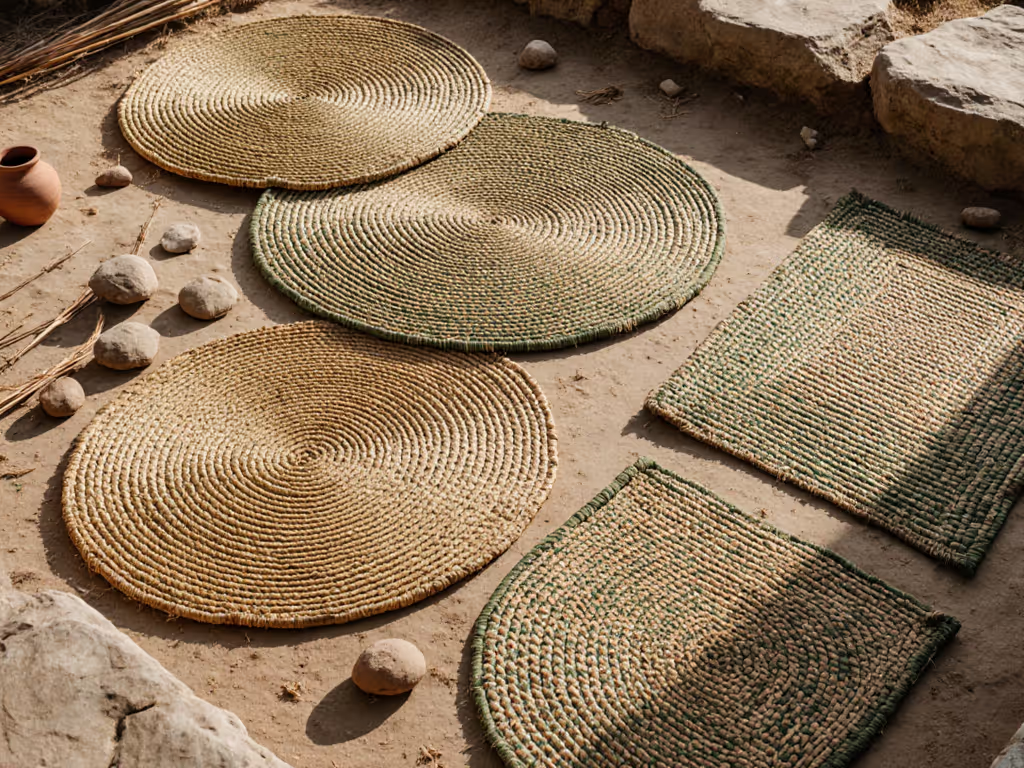
The 8th century Nara period in Japan birthed the most influential innovation: tatami mats. Made of woven rush grass over rice-straw cores (55 mm thick, firmness rating ~40 ILD), tatami did more than cushion. They defined space; standardized sizes created modular rooms where floors doubled as play areas. Unlike Western carpets, tatami's firm, flat surface provided stable support for crawling infants and pulling-to-stand moments. Crucially, they gripped polished wood floors reliably, a non-slip solution modern EVA foam mats still chase.
Meanwhile, Europe relied on wool rugs or hemp mats. Thinner (8 to 12 mm) and softer, they cushioned stone floors but bunched dangerously under active babies. By the 1800s, rug hooking introduced recycled fabric mats, colorful but inconsistent in thickness. Neither culture solved the slippage issue on hard surfaces. Play mat anthropology shows a recurring gap: materials prioritized adult comfort over infant mobility needs. Parents then, like parents now, faced the same trade-off: softness vs. stability.
Two breakthroughs changed everything. First, Charles Goodyear's 1839 vulcanization process created rubber, a material that naturally gripped floors without adhesives. Early rubber play mats (1900s) were 6 mm thick, firm (~50 ILD), and nearly slip-proof on tile. But they yellowed, cracked, and smelled, a precursor to modern off-gassing fears—see our materials safety guide for what to look for today.
Second, mass production made mats accessible. By the 1920s, companies like Goodyear Rubber Company sold standardized play mats. Yet these were still single-purpose: too thin (4 to 5 mm) for hardwood impact, too slick for tile. Cultural play mat evolution stalled here. While playgrounds boomed (the Playground Association of America formed in 1906), infant floor play remained an afterthought, until foam chemistry advanced.
Post-WWII material science birthed ethylene-vinyl acetate (EVA) foam, the game-changer. EVA's closed-cell structure resisted moisture, offered adjustable firmness (70 to 100 kg/m³ density), and could be textured for grip. By the 1970s, puzzle mats (15 to 20 mm thick) dominated. They solved storage (modular tiles!) but introduced new flaws: seams where dirt trapped, curling edges, and inconsistent cushioning over grout lines.
Today's play mat design history culminates in three critical shifts:
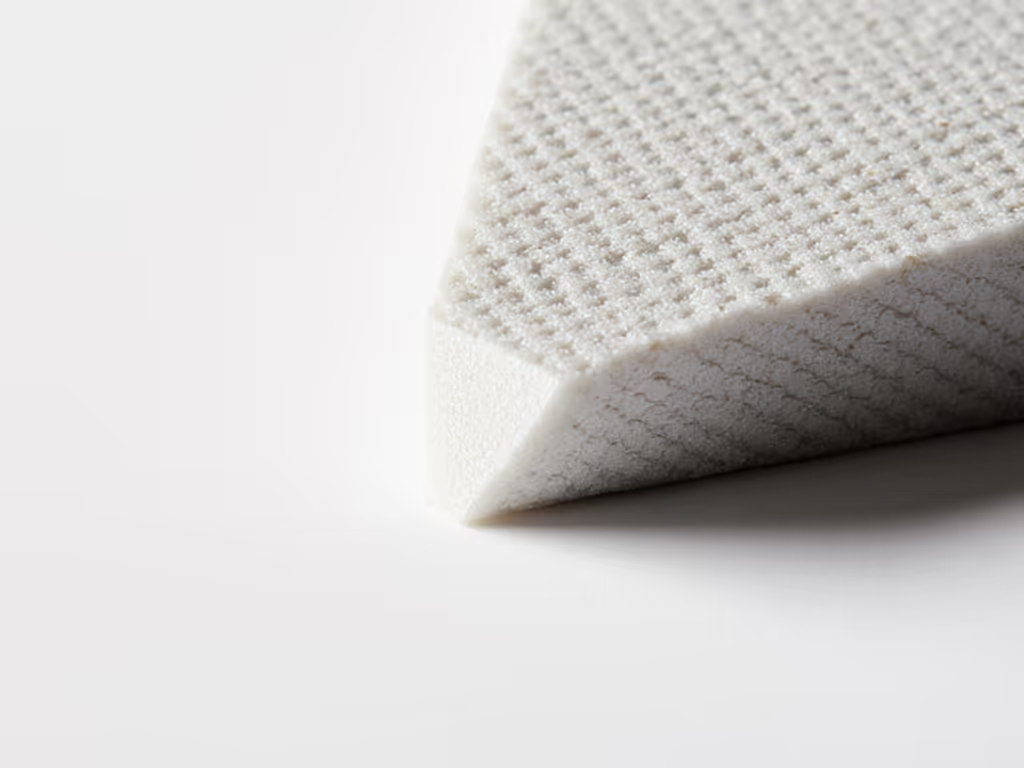
Your apartment's hardwood floors slipping? That's exactly what tatami's woven base tackled. Worried about PVC off-gassing? Early rubber mats faced identical scrutiny. Understanding play mat design history turns modern anxieties into actionable criteria:
I've seen parents buy premium mats that look perfect, only to watch them slide during first steps. It's why I test every mat on concrete, tile, and 100-year-old oak. The right mat doesn't just cushion; it anchors exploration. When my daughter's knees met tile, the thinner mat that stayed put wasn't "less comfortable," it was smarter.
The evolution of play mats proves comfort isn't subjective, it's engineered. From tatami's spatial intelligence to EVA's precision density, each leap solved real-world friction between babies and floors. Today's mat must honor that legacy: no slippage on hardwood, no curling on tile, no toxic shortcuts. It must earn its footprint in your space, literally and metaphorically.
Further Exploration: Dig deeper into how floor type dictates mat performance with our free Floor Compatibility Guide. See real-world test data across 12 floor surfaces, including how modern mats measure up against historical solutions. Because when a mat truly works with your floor, it becomes more than cushioning. It becomes confidence.
Works with your floor.